Imagine hosting a dinner where you pour wine into an elegant glass vessel, and your guest asks, “Is that a decanter or a carafe?” This simple moment highlights a common confusion. The difference between decanter and carafe often goes unnoticed in everyday life, even though both are used to serve beverages beautifully.
A decanter is typically associated with wine aeration and sophistication, while a carafe is more versatile and commonly used for water or juice.
In real-life settings, especially in restaurants and homes, the difference between decanter and carafe matters for both function and presentation. Understanding the difference between decanter and carafe helps elevate your serving style and ensures the right use of each vessel.
If you’re a beginner or an expert, knowing the difference between decanter and carafe can refine your dining experience and impress your guests.
Key Difference Between the Both
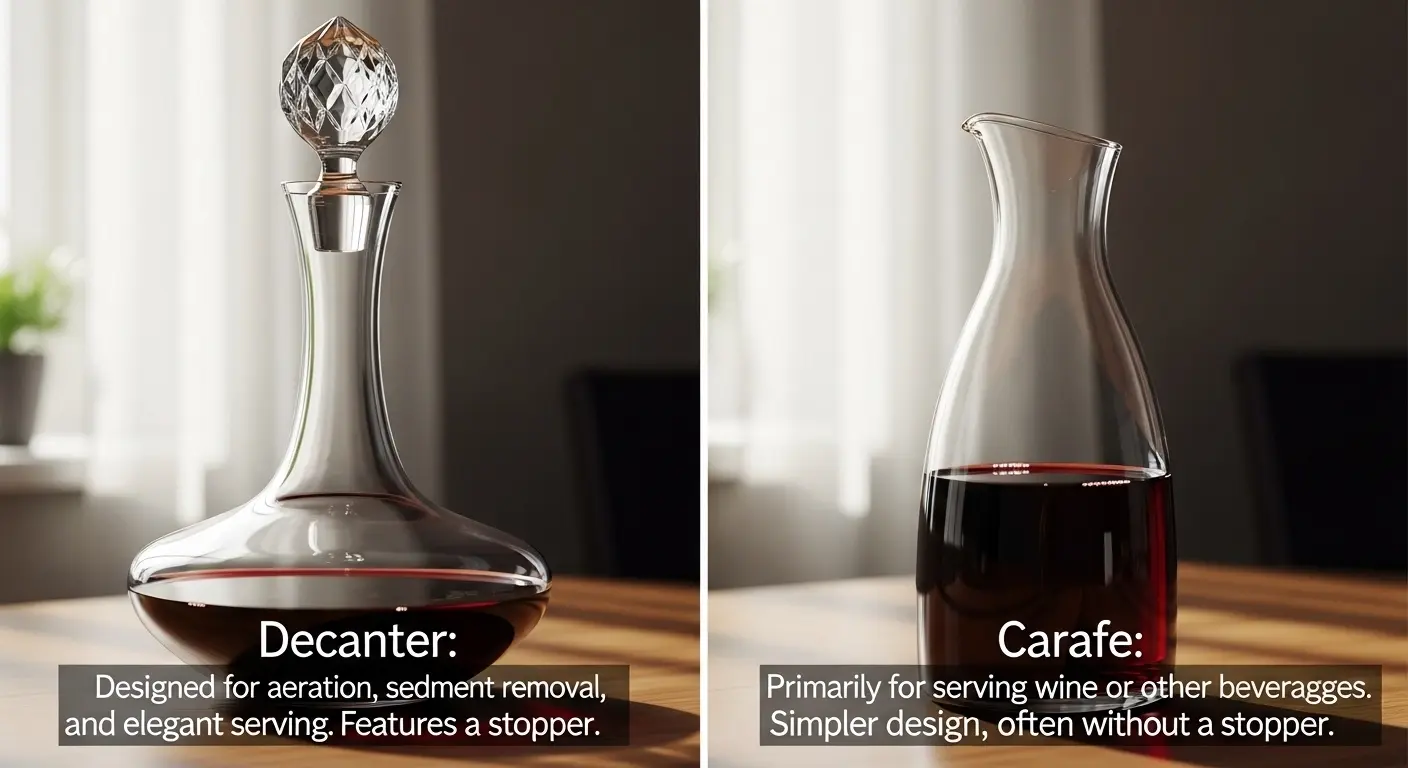
The main difference lies in purpose and design. A decanter is primarily used to aerate wine and separate sediment, while a carafe is used for serving beverages like water, juice, or even wine without the need for aeration.
Why Is Their Difference Necessary to Know for Learners and Experts?
Understanding the difference between a decanter and a carafe is important because it reflects both practical knowledge and social awareness. For learners, it builds basic dining etiquette and helps them use the right tool in the right situation. For experts, especially in hospitality or fine dining, this knowledge enhances professionalism and customer experience.
In society, presentation matters. Using a decanter instead of a carafe for wine can signal elegance and attention to detail, while using a carafe shows simplicity and practicality. This distinction plays a role in restaurants, events, and even home gatherings, making it a valuable skill for everyone.
Pronunciation (US & UK)
- Decanter
- US: di-KAN-ter
- UK: di-KAN-tuh
- Carafe
- US: kuh-RAF
- UK: kuh-RAF
Difference Between Decanter and Carafe
1. Purpose
- Decanter: Used mainly for wine aeration.
Examples:- Pouring red wine into a decanter before serving.
- Using it to remove sediment from aged wine.
- Carafe: Used for serving beverages.
Examples:- Serving water at a restaurant table.
- Holding fresh juice at breakfast.
2. Design
- Decanter: Wide base and narrow neck.
Examples:- Crystal decanter with a stopper.
- Decorative glass decanter for wine.
- Carafe: Simple design, no stopper.
Examples:- Straight glass water carafe.
- Minimalist juice carafe.
3. Stopper
- Decanter: Usually has a stopper.
Examples:- Whiskey decanter with a glass lid.
- Wine decanter with airtight seal.
- Carafe: No stopper.
Examples:- Open-top water jug.
- Restaurant serving carafe.
4. Usage Setting
- Decanter: Formal settings.
Examples:- Fine dining dinners.
- Wine tasting events.
- Carafe: Casual settings.
Examples:- Family meals.
- Office tables.
5. Material
- Decanter: Often crystal or high-quality glass.
Examples:- Hand-cut crystal decanter.
- Luxury glass wine decanter.
- Carafe: Basic glass or plastic.
Examples:- Everyday glass carafe.
- Plastic water carafe.
6. Functionality
- Decanter: Enhances flavor.
Examples:- Improving wine aroma.
- Softening tannins.
- Carafe: Convenience.
Examples:- Easy pouring of water.
- Serving chilled beverages.
7. Shape Variety
- Decanter: Unique artistic shapes.
Examples:- Swan-shaped decanter.
- Wide-bottom spiral decanter.
- Carafe: Standard shapes.
Examples:- Cylindrical design.
- Straight-neck bottle style.
8. Cleaning
- Decanter: Harder to clean.
Examples:- Requires cleaning beads.
- Narrow neck makes washing difficult.
- Carafe: Easy to clean.
Examples:- Wide opening for sponge.
- Dishwasher-safe models.
9. Cost
- Decanter: More expensive.
Examples:- Luxury crystal sets.
- Designer decanters.
- Carafe: Affordable.
Examples:- Budget glass carafe.
- Simple household jug.
10. Symbolism
- Decanter: Elegance and luxury.
Examples:- Used in elite gatherings.
- Symbol of refined taste.
- Carafe: Simplicity and utility.
Examples:- Everyday dining.
- Practical household item.
Nature and Behaviour
- Decanter: Sophisticated, decorative, and functional for wine enhancement.
- Carafe: Practical, simple, and versatile for daily use.
Why People Are Confused About Their Use
People confuse them because both are glass containers used for serving liquids. Their similar appearance and overlapping use (like serving wine) make it difficult to distinguish between them without understanding their specific purpose.
Table: Difference and Similarity
| Feature | Decanter | Carafe | Similarity |
| Purpose | Wine aeration | Beverage serving | Both hold liquids |
| Design | Decorative | Simple | Glass containers |
| Stopper | Yes | No | Used for pouring |
| Cost | Expensive | Affordable | Available in glass |
| Usage | Formal | Casual | Used in dining settings |
Which Is Better in What Situation?
A decanter is better when serving wine, especially red wine that benefits from aeration. It enhances taste, aroma, and overall presentation, making it ideal for formal dinners or special occasions.
A carafe, on the other hand, is better for everyday use. It is perfect for serving water, juice, or even casual wine settings. Its simplicity and ease of use make it practical for daily life.
Metaphors and Similes
- “His personality was like a decanter refined and full of depth.”
- “Her thoughts flowed like water in a carafe simple and clear.”
Connotative Meaning
- Decanter: Positive (luxury, elegance)
- Example: “The decanter on the table showed his refined taste.”
- Carafe: Neutral (simplicity, practicality)
- Example: “She placed a carafe of water for guests.”
Idioms or Proverbs
(No direct idioms exist, but creative usage:)
- “Don’t judge the drink by the decanter.” (Meaning: Don’t judge by appearance)
- Example: “He seemed simple, but don’t judge the drink by the decanter.”
Works in Literature
- Decanter
- Genre: Classic Fiction
- Writer: F. Scott Fitzgerald
- Year: 1925 (The Great Gatsby)
- Carafe
- Genre: Modern Fiction
- Writer: Haruki Murakami
- Year: 2002 (Kafka on the Shore)
Movies Featuring These Objects
- The Great Gatsby (2013, USA)
- Downton Abbey (2019, UK)
FAQs:
1. Can a carafe be used as a decanter?
Yes, but it won’t aerate wine effectively.
2. Is a decanter only for wine?
Mostly yes, but sometimes used for whiskey.
3. Why does a decanter have a wide base?
To increase air exposure for wine.
4. Is a carafe necessary at home?
It’s useful but not essential.
5. Which is more expensive?
Decanters are generally more costly.
How Both Are Useful for Surroundings
Decanters enhance dining aesthetics and improve beverage quality, while carafes provide convenience and hydration. Together, they contribute to both beauty and functionality in everyday environments.
Final Words for Both
A decanter represents elegance and refined taste, while a carafe symbolizes simplicity and practicality. Both serve important roles depending on the context.
Conclusion:
In conclusion, the difference between decanter and carafe lies in their purpose, design, and usage. While a decanter is ideal for enhancing wine and creating a sophisticated atmosphere, a carafe is perfect for everyday convenience and simple serving needs.
Understanding this difference not only improves your knowledge but also enhances your lifestyle and presentation skills. Whether you choose elegance or practicality, both have their unique value in modern living.

I am an English language writer and editor with over 10 years of experience in explaining confusing English words, grammar rules, and word usage differences. I specialize in making complex language topics simple, clear, and practical for everyday readers.
At diffruli.com, I am helping learners to understand common English word differences such as spelling variations, similar meanings, and correct usage in American and British English. My writing style is reader-friendly, example-driven, and designed to improve confidence in written and spoken English.