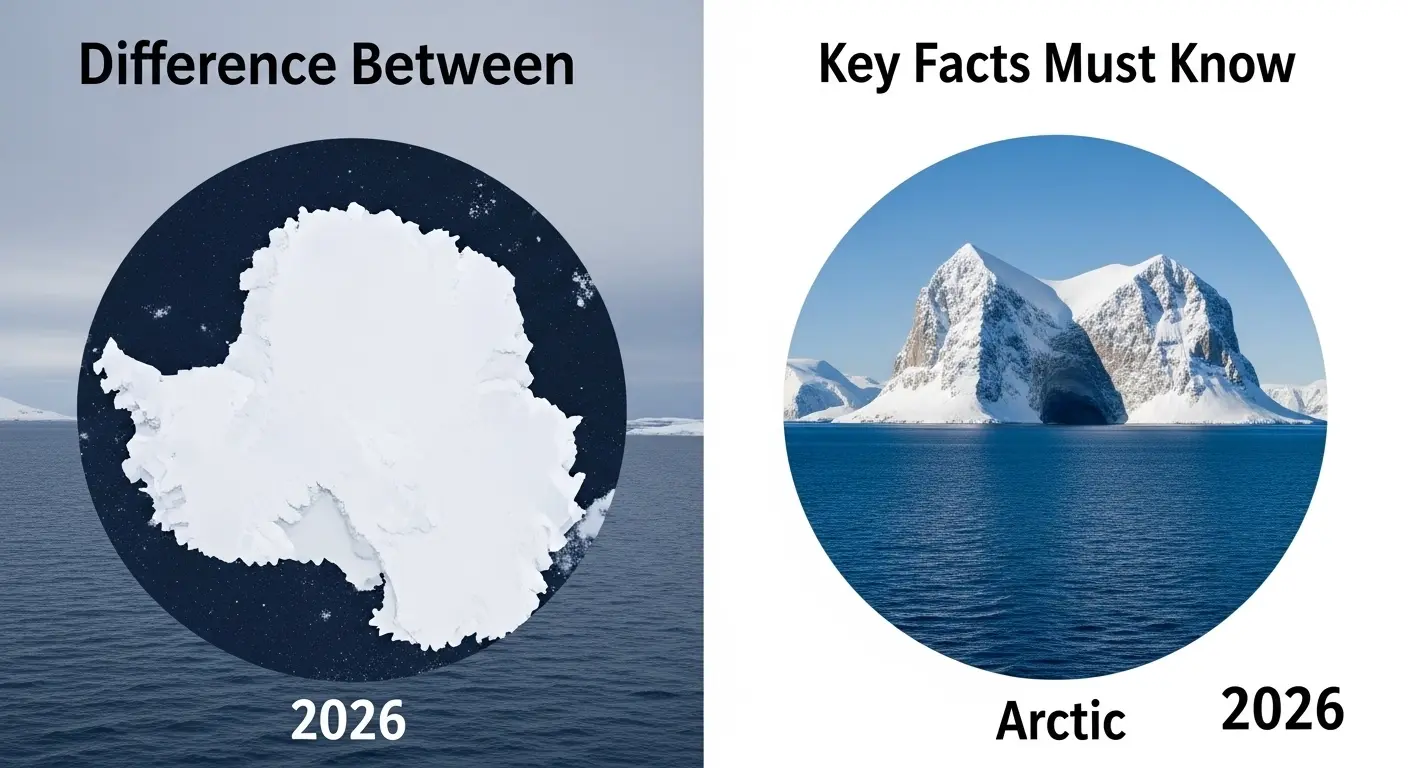
Imagine planning an extreme adventure to the coldest places on Earth. You hear people talking about the Arctic and Antarctica, but confusion quickly sets in are they the same? Are they both just icy lands at the ends of the Earth? Understanding the difference between Antarctica and Arctic is essential, especially when these regions play a major role in global climate and wildlife.
The difference between Antarctica and Arctic goes beyond just location. It includes climate, geography, wildlife, and even human presence. Many learners and even experts often mix them up because both are associated with ice and extreme cold.
However, the difference between Antarctica and Arctic becomes clear when you explore their unique characteristics.
In this blog, we will simplify the difference between Antarctica and Arctic with real-life comparisons, examples, and easy explanations to help you understand them deeply.
Key Difference Between Both
The main difference is simple:
- Antarctica is a continent surrounded by ocean.
- Arctic is an ocean surrounded by continents.
Why Is Their Difference Important for Learners and Experts?
Understanding the difference between Antarctica and Arctic is important because these regions directly affect global climate systems, sea levels, and biodiversity. For learners, it builds clear geographical knowledge. For experts, it helps in research related to climate change, ecosystems, and environmental policies. Misunderstanding these regions can lead to incorrect assumptions about global warming and wildlife conservation. Their importance in society is growing as both regions act as indicators of Earth’s environmental health.
Pronunciation (US & UK)
- Antarctica
- US: /ænˈtɑːrk.tɪ.kə/
- UK: /ænˈtɑːk.tɪ.kə/
- US: /ænˈtɑːrk.tɪ.kə/
- Arctic
- US: /ˈɑːrk.tɪk/
- UK: /ˈɑːk.tɪk/
- US: /ˈɑːrk.tɪk/
Difference Between Antarctica and Arctic
1. Location
- Antarctica is at the South Pole
Example 1: Scientists travel there for research.
Example 2: It is far from major continents. - Arctic is at the North Pole
Example 1: It includes parts of Canada and Russia.
Example 2: People live near it.
2. Geography
- Antarctica is a continent
Example 1: Covered by thick ice sheets
Example 2: Has mountains beneath ice - Arctic is an ocean
Example 1: Frozen seawater
Example 2: Surrounded by land masses
3. Climate
- Antarctica is colder
Example 1: Temperatures reach −80°C
Example 2: Very dry (polar desert) - Arctic is less cold
Example 1: Warmer due to ocean currents
Example 2: Seasonal melting occurs
4. Wildlife
- Antarctica has penguins
Example 1: Emperor penguins
Example 2: Seals live there - Arctic has polar bears
Example 1: Polar bears hunt on ice
Example 2: Arctic foxes
5. Human Presence
- Antarctica has no permanent residents
Example 1: Only researchers
Example 2: Temporary stations - Arctic has indigenous people
Example 1: Inuit communities
Example 2: Small towns exist
6. Vegetation
- Antarctica has almost no plants
Example 1: Mosses
Example 2: Algae - Arctic has tundra vegetation
Example 1: Shrubs
Example 2: Grass
7. Ice Type
- Antarctica has land ice
Example 1: Glaciers
Example 2: Ice sheets - Arctic has sea ice
Example 1: Floating ice
Example 2: Seasonal ice
8. Size
- Antarctica is larger
Example 1: 5th largest continent
Example 2: Massive ice cover - Arctic is smaller
Example 1: Ocean region
Example 2: Varies in size
9. Accessibility
- Antarctica is hard to reach
Example 1: Special expeditions
Example 2: Extreme weather - Arctic is more accessible
Example 1: Flights available
Example 2: Cruise tourism
10. Ownership
- Antarctica has no country ownership
Example 1: Governed by treaty
Example 2: Used for science - Arctic is shared by countries
Example 1: Russia, Canada
Example 2: Political interests
Nature and Behaviour
- Antarctica: Harsh, isolated, extremely cold, and stable in terms of ice mass.
- Arctic: More dynamic, slightly warmer, and influenced by human activity.
Why People Are Confused?
People confuse them because both are icy, remote, and located at Earth’s poles. The similar names and lack of detailed education also contribute to this confusion.
Table: Difference and Similarity
| Feature | Antarctica | Arctic | Similarity |
| Location | South Pole | North Pole | Both polar regions |
| Type | Continent | Ocean | Covered with ice |
| Wildlife | Penguins | Polar bears | Unique animals |
| Population | None | Present | Harsh living |
| Climate | Colder | Less cold | Extreme weather |
Which Is Better in What Situation?
Antarctica:
Best for scientific research and studying climate change. It is ideal for experts who want to understand Earth’s past and future climate patterns.
Arctic:
Better for human habitation and exploration. It supports communities and offers opportunities for travel and resource study.
Metaphors and Similes
- “Cold as Antarctica” → extremely cold
- “Navigating like the Arctic explorer” → careful decision-making
Connotative Meaning
- Antarctica
- Positive: purity, untouched nature
- Negative: isolation
- Neutral: remote land
- Positive: purity, untouched nature
- Arctic
- Positive: survival, resilience
- Negative: harshness
- Neutral: cold region
- Positive: survival, resilience
Idioms / Proverbs
- “Break the ice” (related to cold regions)
Example: He broke the ice in the meeting. - “Out in the cold”
Example: She felt left out in the cold.
Works in Literature
- “At the Mountains of Madness” Horror, H. P. Lovecraft, 1936
- “The Arctic Grail” History, Pierre Berton, 1988
Movies
- “March of the Penguins” 2005, France
- “Arctic” 2018, Iceland
FAQs:
1. Is Antarctica colder than Arctic?
Yes, Antarctica is much colder.
2. Are there people living in Antarctica?
No permanent residents, only scientists.
3. Do polar bears live in Antarctica?
No, they live in the Arctic.
4. Why is Arctic melting faster?
Because it is ocean-based and affected by climate change.
5. Can tourists visit Antarctica?
Yes, but under strict conditions.
How Both Are Useful for Surroundings
Both regions regulate Earth’s temperature, influence ocean currents, and support unique ecosystems. They are essential for maintaining global environmental balance.
Final Words for Both
Antarctica represents isolation and scientific discovery, while the Arctic reflects adaptability and human survival.
Conclusion:
The difference between Antarctica and Arctic is clear when you explore their location, climate, wildlife, and human presence. While both are icy and extreme, they serve very different roles in our world. Understanding this difference is not just academic it helps us appreciate Earth’s diversity and the urgent need to protect these fragile environments.
If you are a learner or an expert, knowing these distinctions can deepen your understanding of global geography and environmental science.

I am an English content writer with more than 8 years of experience in writing about English word differences, grammar clarity, and everyday language usage. I am passionate about helping learners avoid common mistakes caused by similar-looking or confusing English words.
At diffruli.com, I write easy-to-understand guides that explain the difference between commonly confused words, spelling variations, and correct usage with real-life examples. My content is especially useful for students, writers, and non-native English speakers who want quick, accurate, and practical answers.