Imagine a bright child in a classroom who struggles to read aloud, often mixing up letters or skipping words. Another student, equally intelligent, finds it hard to write neatly or express thoughts clearly on paper. These challenges are not due to lack of effort but are linked to learning differences specifically the difference between dyslexia and dysgraphia.
Understanding the difference between dyslexia and dysgraphia helps parents, teachers, and learners provide the right support.
While both conditions affect learning, they target different skills reading versus writing. Many people confuse them, but knowing the difference between dyslexia and dysgraphia can make a huge impact on education and personal development.
In this article, we will explore the difference between dyslexia and dysgraphia in a simple, clear, and practical way.
Pronunciation (US & UK)
- Dyslexia
- US: /dɪsˈlɛksiə/
- UK: /dɪsˈlɛksiə/
- Dysgraphia
- US: /dɪsˈɡræfiə/
- UK: /dɪsˈɡrɑːfiə/
Key Difference Between the Both
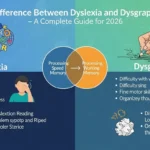
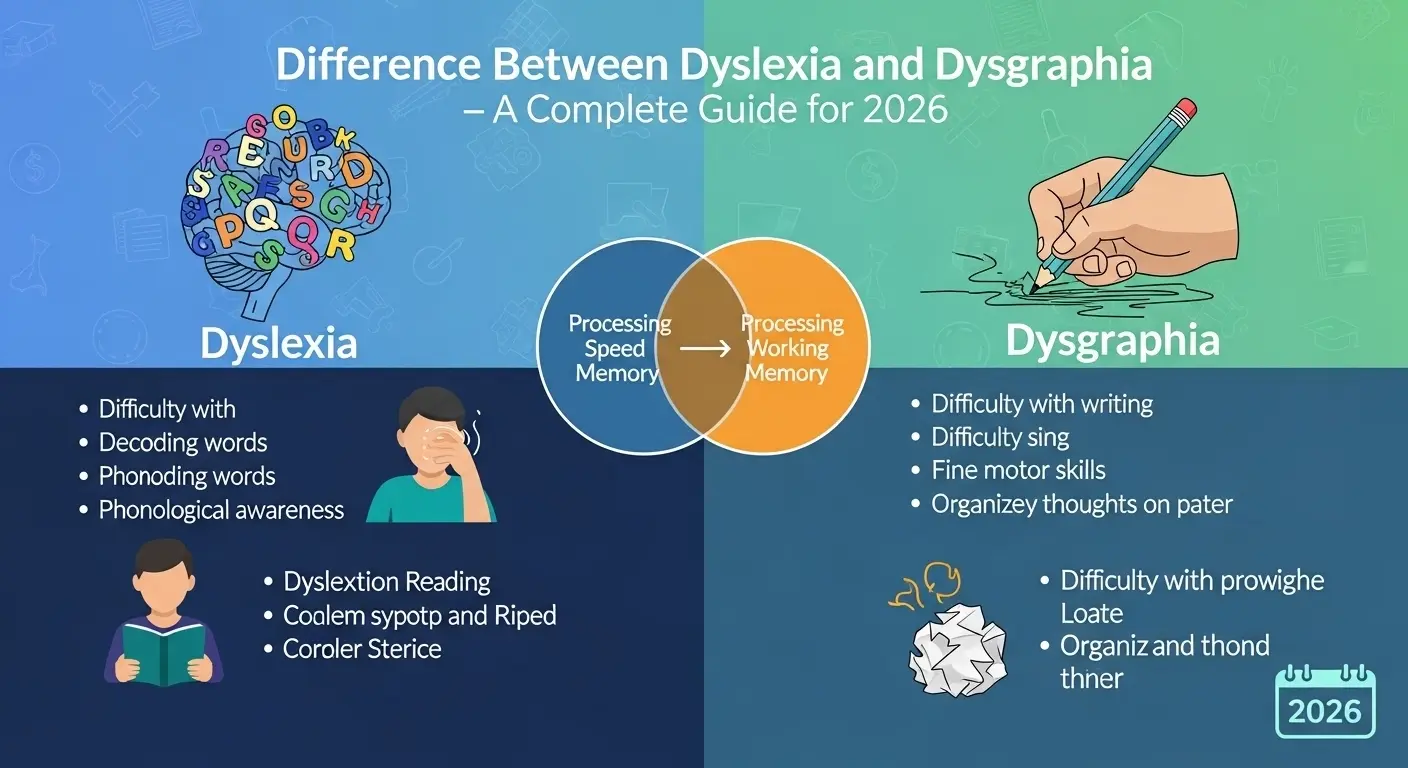
The main difference between dyslexia and dysgraphia is simple:
- Dyslexia affects reading and language processing.
- Dysgraphia affects writing and fine motor skills.
Why Is Their Difference Important in Society?
Understanding the difference between dyslexia and dysgraphia is essential for both learners and experts. It allows educators to design proper teaching strategies and helps society avoid labeling individuals as “lazy” or “slow.”
Recognizing these differences promotes inclusion, builds confidence in affected individuals, and ensures they receive the correct interventions. For professionals, it improves diagnosis accuracy, while for learners, it opens doors to better academic and career success.
Difference Between Dyslexia and Dysgraphia
1. Core Skill Affected
- Dyslexia: Difficulty in reading words and letters.
- Example 1: A child reads “was” as “saw.”
- Example 2: Skips lines while reading a paragraph.
- Dysgraphia: Difficulty in writing and forming letters.
- Example 1: Letters appear messy or unclear.
- Example 2: Cannot maintain spacing between words.
2. Brain Function Involved
- Dyslexia: Language processing centers.
- Example 1: Trouble decoding sounds.
- Example 2: Difficulty recognizing words quickly.
- Dysgraphia: Motor skills and writing coordination.
- Example 1: Poor hand control.
- Example 2: Slow writing speed.
3. Reading Ability
- Dyslexia: Weak reading skills.
- Example 1: Reads slowly.
- Example 2: Mispronounces words.
- Dysgraphia: Reading is usually normal.
- Example 1: Can read fluently.
- Example 2: Understands written text easily.
4. Writing Ability
- Dyslexia: Writing errors due to spelling issues.
- Example 1: Writes “frend” instead of “friend.”
- Example 2: Misspells common words.
- Dysgraphia: Poor handwriting and structure.
- Example 1: Uneven letter sizes.
- Example 2: Sentences lack proper alignment.
5. Spelling
- Dyslexia: Frequent spelling mistakes.
- Example 1: Confuses “b” and “d.”
- Example 2: Spells words differently each time.
- Dysgraphia: Spelling may be correct but poorly written.
- Example 1: Correct word but unreadable handwriting.
- Example 2: Letters overlap.
6. Speed of Work
- Dyslexia: Slow reading speed.
- Example 1: Takes longer to finish books.
- Example 2: Avoids reading tasks.
- Dysgraphia: Slow writing speed.
- Example 1: Takes time to copy notes.
- Example 2: Struggles in timed exams.
7. Expression of Ideas
- Dyslexia: Trouble expressing ideas in reading/writing.
- Example 1: Short answers due to difficulty reading questions.
- Example 2: Avoids written responses.
- Dysgraphia: Ideas are clear but hard to write.
- Example 1: Speaks well but writes poorly.
- Example 2: Needs help organizing thoughts on paper.
8. Fine Motor Skills
- Dyslexia: Not affected.
- Example 1: Normal grip on pen.
- Example 2: Can draw properly.
- Dysgraphia: Weak motor control.
- Example 1: Difficulty holding a pencil.
- Example 2: Hand tires quickly.
9. Academic Impact
- Dyslexia: Affects reading-based subjects.
- Example 1: Trouble in literature.
- Example 2: Difficulty understanding written exams.
- Dysgraphia: Affects written assignments.
- Example 1: Poor exam presentation.
- Example 2: Low marks due to messy writing.
10. Support Needed
- Dyslexia: Reading interventions.
- Example 1: Phonics training.
- Example 2: Audiobooks.
- Dysgraphia: Writing support tools.
- Example 1: Typing instead of writing.
- Example 2: Occupational therapy.
Nature and Behaviour
- Dyslexia: Individuals may avoid reading, feel frustrated with books, and prefer listening over reading.
- Dysgraphia: Individuals may avoid writing tasks, show messy notebooks, and struggle with organizing written work.
Why Are People Confused?
People often confuse these terms because both affect learning and academic performance. Since reading and writing are closely related, difficulties in one area can appear similar to the other, leading to misunderstanding.
Table: Difference and Similarities
| Aspect | Dyslexia | Dysgraphia | Similarity |
| Main Issue | Reading | Writing | Both are learning disorders |
| Brain Area | Language processing | Motor coordination | Brain-based conditions |
| Writing | Spelling errors | Poor handwriting | Writing affected in both |
| Reading | Weak | Strong | Learning difficulty |
| Speed | Slow reading | Slow writing | Reduced performance speed |
Which Is Better in What Situation?
Dyslexia:
In situations where verbal communication is key, individuals with dyslexia often perform well. They may excel in speaking, storytelling, and creative thinking, especially when reading is not the main requirement.
Dysgraphia:
In situations involving verbal explanation or digital tools, individuals with dysgraphia can succeed. Using typing or speech-to-text technology allows them to express ideas clearly without handwriting barriers.
Metaphors and Similes
- Dyslexia: “Reading feels like solving a puzzle with missing pieces.”
- Dysgraphia: “Writing is like trying to draw with a shaky hand.”
Connotative Meaning
- Dyslexia: Neutral (sometimes seen as a challenge but also linked to creativity)
- Example: “His dyslexia didn’t stop him from becoming a great thinker.”
- Dysgraphia: Neutral (associated with difficulty but manageable)
- Example: “Her dysgraphia improved with practice and tools.”
Idioms or Proverbs (Related Usage)
- “Practice makes perfect”
- Example: Practice helps both dyslexia and dysgraphia learners improve skills.
- “Don’t judge a book by its cover”
- Example: A messy writer may still have brilliant ideas despite dysgraphia.
Works in Literature
- The Dyslexia Empowerment Plan Ben Foss (Non-fiction, 2013)
- Overcoming Dysgraphia Cheri Dotterer (Educational, 2018)
Movies Related to the Keywords
- Taare Zameen Par (2007, India) focuses on dyslexia
- Like Stars on Earth (2007, International release, India)
FAQs:
1. What is the main difference between dyslexia and dysgraphia?
Dyslexia affects reading, while dysgraphia affects writing.
2. Can a person have both conditions?
Yes, some individuals may experience both dyslexia and dysgraphia.
3. Is dyslexia related to intelligence?
No, it does not affect intelligence.
4. How is dysgraphia treated?
Through therapy, writing practice, and assistive tools.
5. Are these conditions permanent?
They can be managed with proper support and strategies.
How Both Are Useful for Surroundings
Understanding these conditions helps create inclusive environments. Schools, workplaces, and families can adapt methods to support individuals, leading to better productivity and emotional well-being.
Final Words for Both
Dyslexia and dysgraphia are not weaknesses but different ways the brain works. With the right support, individuals can thrive and achieve success in many fields.
Conclusion:
In conclusion, understanding the difference between dyslexia and dysgraphia is essential for education and personal growth. While dyslexia impacts reading and language processing, dysgraphia affects writing and motor skills.
Both conditions require awareness, patience, and proper support. By recognizing these differences, society can create a more inclusive environment where every individual has the opportunity to succeed. Awareness is the first step toward empowerment and acceptance.

I am an English content writer with more than 8 years of experience in writing about English word differences, grammar clarity, and everyday language usage. I am passionate about helping learners avoid common mistakes caused by similar-looking or confusing English words.
At diffruli.com, I write easy-to-understand guides that explain the difference between commonly confused words, spelling variations, and correct usage with real-life examples. My content is especially useful for students, writers, and non-native English speakers who want quick, accurate, and practical answers.