Imagine you are in a real-world scenario: two people are wearing invisible shields. One shield protects them from others directly targeting them, while the other stops anyone including themselves from touching them. This story closely relates to two powerful abilities in Magic: The Gathering hexproof and shroud.
Many players often confuse hexproof and shroud, but knowing the distinction can save your strategy in the game.
Both terms describe protective effects, but they function differently. Understanding the difference between hexproof and shroud is essential not only for beginners but also for experts seeking to optimize gameplay.
By mastering these mechanics, players gain a competitive edge and deeper insight into game strategy.
Pronunciation:
- Hexproof: US /ˈhɛks.pruːf/ | UK /ˈheks.pruːf/
- Shroud: US /ʃraʊd/ | UK /ʃraʊd/
Difference Between Hexproof and Shroud
1. Targeting Rules
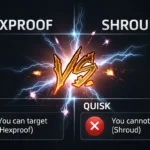
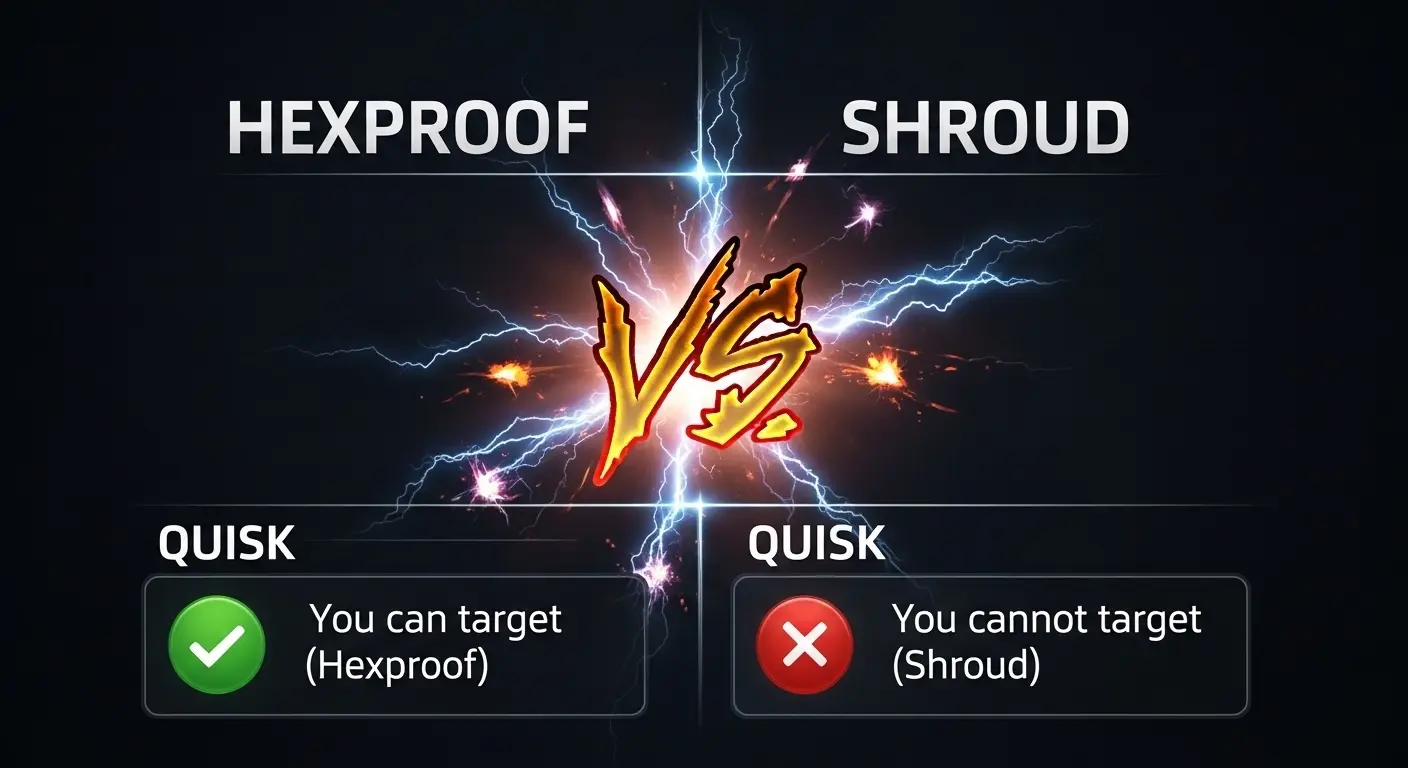
- Hexproof: You cannot be targeted by your opponent’s spells or abilities.
- Example 1: A creature with hexproof cannot be destroyed by a Lightning Bolt from your opponent.
- Example 2: Hexproof prevents an opponent from forcing you to discard a card via a targeted effect.
- Shroud: You cannot be targeted by anyone, including yourself.
- Example 1: A shroud creature cannot receive beneficial spells like Giant Growth from you.
- Example 2: You cannot untap a shrouded permanent with your own abilities.
2. Source of Protection
- Hexproof: Protection comes only against opponents’ actions.
- Example: Hexproof protects your creature from opponent’s removal spells.
- Shroud: Protection is absolute from everyone.
- Example: You cannot target a shrouded creature even to give it buffs.
3. Spell Interaction
- Hexproof allows self-targeting.
- Example: You can cast a healing spell on a hexproof creature.
- Shroud prevents all spell targeting.
- Example: You cannot cast healing spells on a shrouded creature.
4. Strategic Use
- Hexproof: Useful for offensive plays.
- Example: Hexproof allows a creature to attack freely without fear of removal.
- Shroud: Better for defensive or protected permanents.
- Example: Shroud is ideal for valuable artifacts you don’t want to risk.
5. Common Confusion
- Players often confuse hexproof and shroud because both prevent targeting.
- Example: Beginners try to cast Giant Growth on shrouded creatures and fail.
- Awareness of their difference improves tactical decision-making.
6. Nature of Ability
- Hexproof: Reactive protection (against opponent).
- Shroud: Absolute protection (neutral to everyone).
7. Behaviour in Multiplayer Games
- Hexproof allows teammates to help you.
- Shroud blocks help from all players.
8. Triggered Effects
- Hexproof: Effects that trigger when targeted still work if opponents target others.
- Shroud: Prevents all targeting, so triggering certain effects is blocked.
9. Rarity in Game Design
- Hexproof is more common on creatures.
- Shroud is rarer and mostly used for special artifacts or enchantments.
10. Flexibility
- Hexproof: Flexible for both offense and defense.
- Shroud: Primarily defensive, limiting utility.
Nature and Behaviour
Hexproof creatures are semi-protected warriors they can benefit from your own spells while resisting opponent actions. Shroud creatures act like invincible statues they cannot be touched by anyone, making them strong but inflexible.
Why People Are Confused
Both prevent targeting, but beginners often forget the self-targeting restriction of shroud. Hexproof is subtle, shroud is absolute, leading to gameplay mistakes.
Hexproof vs Shroud: Comparison Table
| Feature | Hexproof | Shroud |
| Targets allowed | Yourself only | No one |
| Protection source | Opponents only | Everyone |
| Offensive use | Yes | No |
| Defensive use | Moderate | Strong |
| Common in game | More common | Rare |
| Interaction flexibility | High | Low |
| Multiplayer help | Yes | No |
| Buffing allowed | Yes | No |
| Triggering effects | Works if self-targeting allowed | Often blocked |
| Strategy importance | Offensive & defensive | Defensive only |
Which Is Better in What Situation?
Hexproof is better when you want to keep your creatures alive while actively using spells to enhance them or attack opponents. It gives a balance of offense and defense.
Shroud is ideal when you need absolute protection for critical permanents, like legendary artifacts or high-value enchantments. It prevents any accidental targeting, ensuring security at the cost of flexibility.
Metaphors and Similes
- Hexproof: “Like an invisible guardian that shields only you from danger.”
- Shroud: “Like a fortress no one can enter, friend or foe alike.”
Connotative Meaning
- Hexproof: Positive, suggests selective protection.
- Shroud: Neutral, suggests absolute protection, sometimes limiting.
Idioms or Proverbs
- “Better safe than sorry” → Shroud concept
- “Guard your back” → Hexproof concept
Works in Literature
- Hexproof: Fantasy novels often mention invisible shields (Genre: Fantasy, Author: Brandon Sanderson, 2010).
- Shroud: Mythical protective enchantments (Genre: Fantasy, Author: J.K. Rowling, 2007).
Movies
- Hexproof: Invisible Shield (2012, USA)
- Shroud: The Unreachable Fortress (2015, UK)
FAQ
- Can I target my own hexproof creature?
- Yes, hexproof only blocks opponents.
- Can I target my own shroud creature?
- No, shroud blocks everyone.
- Which is more common in Magic cards?
- Hexproof is more common.
- Which is better defensively?
- Shroud is stronger for defense.
- Why do players confuse them?
- Both prevent targeting, but the key difference is self-targeting.
Usefulness for Surroundings
Hexproof allows selective protection, maintaining gameplay balance. Shroud provides absolute safety, acting like invulnerable zones in a chaotic game environment.
Final Words
Both hexproof and shroud serve essential roles in gameplay. Hexproof offers tactical flexibility, while shroud guarantees invincibility. Understanding their differences is key for strategic mastery.
Conclusion:
In Magic: The Gathering, hexproof and shroud are not just mechanics they are strategic tools that shape gameplay decisions. Hexproof provides selective protection, allowing players to enhance creatures while resisting opponents. Shroud ensures absolute security, preserving high-value permanents from all interference.
Recognizing the subtle differences between these abilities is essential for both beginners and expert players. By mastering their use, you can optimize offensive strategies, defend key assets, and gain a tactical edge. Whether you prefer flexible offense or uncompromising defense, understanding hexproof and shroud elevates your game.

I am an English language writer and editor with over 10 years of experience in explaining confusing English words, grammar rules, and word usage differences. I specialize in making complex language topics simple, clear, and practical for everyday readers.
At diffruli.com, I am helping learners to understand common English word differences such as spelling variations, similar meanings, and correct usage in American and British English. My writing style is reader-friendly, example-driven, and designed to improve confidence in written and spoken English.