Imagine a farmer testing the water of his irrigation canal before watering his crops. He checks the pH level to see if the water is acidic or basic. Later, a water technician tells him that checking only pH is not enough he must also measure alkalinity. At first, the farmer thinks both mean the same thing.
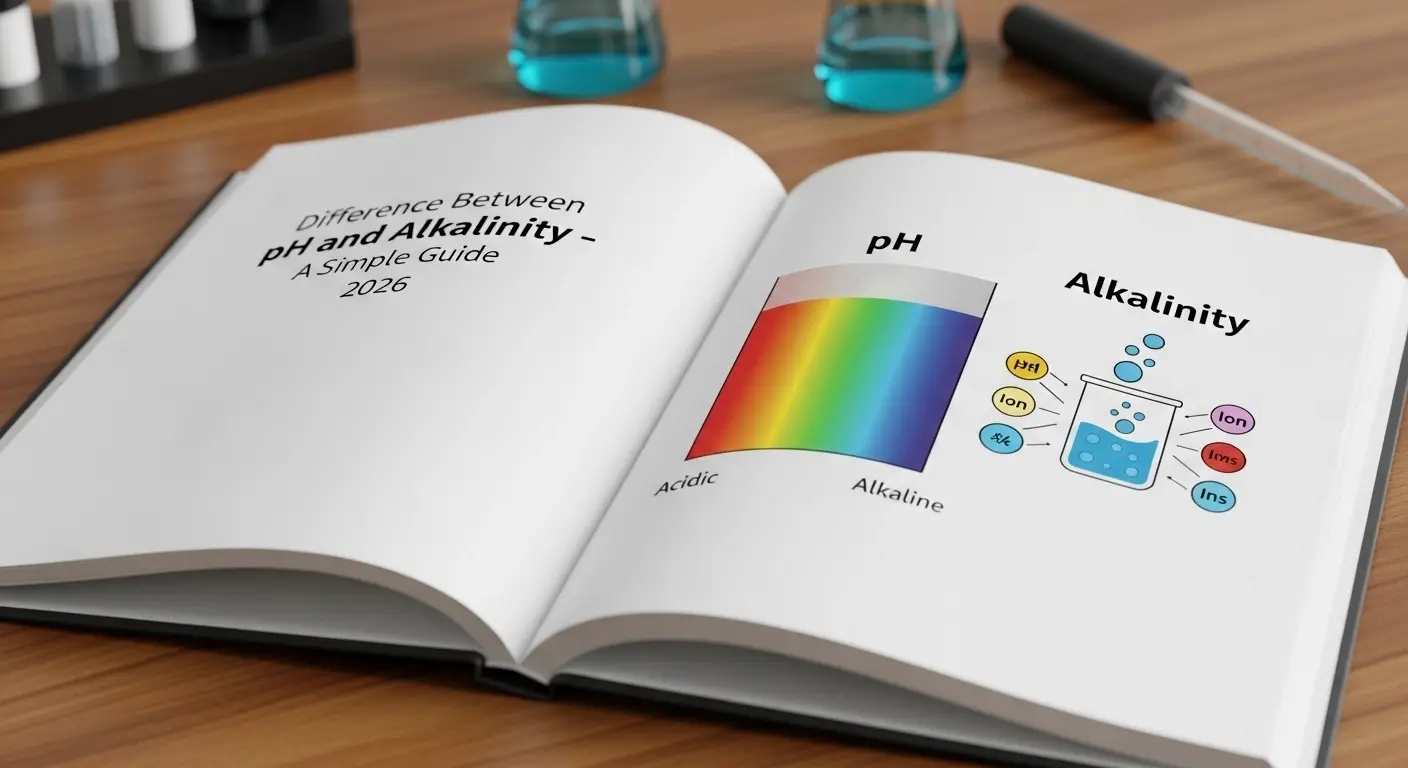
However, scientists explain the difference between pH and alkalinity: pH shows how acidic or basic water is, while alkalinity measures the water’s ability to resist changes in pH.
Understanding the difference between pH and alkalinity is important in many real-world areas such as agriculture, drinking water treatment, aquariums, and swimming pools. People often confuse these terms because both relate to water chemistry and acidity.
Learning the difference between pH and alkalinity helps individuals manage water quality effectively. When people clearly understand the difference between pH and alkalinity, they can protect crops, aquatic life, and human health more efficiently.
Key Difference Between the Both
The basic difference between pH and alkalinity is that pH measures how acidic or basic a solution is, while alkalinity measures the solution’s ability to neutralize acids and maintain a stable pH.
Why Their Difference Is Necessary to Know for Learners and Experts
Understanding the difference between these two terms is essential for students, scientists, farmers, and environmental experts. Water quality affects drinking water safety, soil fertility, fish survival, and industrial processes.
Learners who know the difference between pH and alkalinity can better understand chemistry and environmental science. Experts use this knowledge to control pollution, treat wastewater, and maintain healthy ecosystems. In society, proper water management protects agriculture, supports public health, and maintains aquatic biodiversity.
Pronunciation
| Word | US Pronunciation | UK Pronunciation |
| pH | /ˌpiːˈeɪtʃ/ | /ˌpiːˈeɪtʃ/ |
| Alkalinity | /ˌæl.kəˈlɪ.nə.t̬i/ | /ˌæl.kəˈlɪ.nɪ.ti/ |
Linking Hook:
Now that we understand the basic idea and pronunciation, let us explore the difference between pH and alkalinity in greater detail.
Difference Between pH and Alkalinity
1. Definition
pH: Measures the acidity or basicity of a solution.
Examples:
- Lemon juice has a low pH, meaning it is acidic.
- Soap solution has a high pH, meaning it is basic.
Alkalinity: Measures the water’s capacity to neutralize acids.
Examples:
- Water rich in bicarbonates has high alkalinity.
- Distilled water has very low alkalinity.
2. What They Measure
pH: Measures the concentration of hydrogen ions.
Examples:
- Vinegar shows high hydrogen ions and low pH.
- Baking soda solution shows lower hydrogen ions and higher pH.
Alkalinity: Measures buffering compounds like bicarbonates.
Examples:
- Groundwater with minerals has high alkalinity.
- Rainwater has low alkalinity.
3. Scale vs Capacity
pH: Uses a scale from 0 to 14.
Examples:
- 7 is neutral.
- 3 is strongly acidic.
Alkalinity: Measures buffering capacity in mg/L or ppm.
Examples:
- 100 mg/L alkalinity is moderate.
- 300 mg/L alkalinity is high.
4. Sensitivity to Changes
pH: Changes quickly when acids or bases are added.
Examples:
- Adding lemon juice to water lowers pH.
- Adding baking soda raises pH.
Alkalinity: Changes slowly and stabilizes pH.
Examples:
- Limestone in water maintains alkalinity.
- Mineral-rich lakes resist pH changes.
5. Role in Water Chemistry
pH: Indicates chemical condition at a given moment.
Examples:
- Pool water must stay near pH 7.4.
- Drinking water should remain near neutral pH.
Alkalinity: Acts as a buffer against pH fluctuations.
Examples:
- Aquariums require balanced alkalinity.
- Lakes need alkalinity to protect fish.
6. Impact on Living Organisms
pH: Directly affects organisms’ survival.
Examples:
- Fish die in extremely acidic water.
- Plants grow poorly in very alkaline soil.
Alkalinity: Protects ecosystems from sudden pH change.
Examples:
- Streams with higher alkalinity support aquatic life.
- Agricultural soil buffering improves crop health.
7. Measurement Methods
pH: Measured with pH meters or strips.
Examples:
- Laboratory pH meters.
- Aquarium test strips.
Alkalinity: Measured through titration tests.
Examples:
- Water laboratory analysis.
- Pool chemical testing kits.
8. Scientific Focus
pH: Focuses on acidity level.
Examples:
- Acid rain monitoring.
- Food acidity testing.
Alkalinity: Focuses on buffering chemicals.
Examples:
- Wastewater treatment monitoring.
- Environmental lake analysis.
9. Chemical Components
pH: Depends mainly on hydrogen ions.
Examples:
- Hydrochloric acid lowers pH.
- Sodium hydroxide raises pH.
Alkalinity: Depends on bicarbonates, carbonates, and hydroxides.
Examples:
- Calcium carbonate in rocks.
- Bicarbonate ions in groundwater.
10. Practical Use
pH: Used to determine acidity level instantly.
Examples:
- Food preservation testing.
- Cosmetic product formulation.
Alkalinity: Used to maintain stability in water systems.
Examples:
- Swimming pool management.
- Drinking water treatment.
Nature and Behaviour of Both
pH:
pH is dynamic and can change quickly when chemicals are added. It represents the immediate acidic or basic condition of a solution.
Alkalinity:
Alkalinity behaves like a buffer. It stabilizes water chemistry and prevents rapid pH changes.
Why People Are Confused About Their Use
People often confuse the two because both relate to acidity and water chemistry. Many assume that high alkalinity means high pH, but this is not always true. A solution may have moderate pH but high alkalinity because of buffering minerals.
Table Showing Difference and Similarity
| Feature | pH | Alkalinity | Similarity |
| Meaning | Acidity/basicity level | Ability to neutralize acids | Both relate to water chemistry |
| Measurement | pH scale (0–14) | mg/L or ppm | Both measured in water testing |
| Function | Indicates current condition | Maintains stability | Both influence water quality |
| Change Rate | Changes quickly | Changes slowly | Both affected by chemicals |
Which Is Better in What Situation?
When pH Is More Important
pH is more important when the immediate acidity or basicity of water needs to be known. For example, in swimming pools, the pH must remain within a specific range to protect swimmers’ skin and eyes. In agriculture, soil pH determines which crops will grow successfully. Food production and pharmaceuticals also rely on accurate pH control. Therefore, when quick chemical conditions must be measured, pH becomes the most useful indicator.
When Alkalinity Is More Important
Alkalinity becomes more important when stability in water chemistry is required. In aquariums, lakes, and water treatment systems, alkalinity prevents sudden pH fluctuations that could harm fish and plants. High alkalinity acts as a buffer that neutralizes acids and keeps the water balanced over time. For long-term water quality management, alkalinity is essential because it ensures chemical stability and environmental protection.
Use in Metaphors and Similes
pH in figurative language
- “His mood changed like the pH of a chemical solution.”
- “Her temper was as acidic as a low pH.”
Alkalinity in figurative language
- “Her calm personality worked like alkalinity, buffering every conflict.”
- “A wise leader is like alkalinity, stabilizing the group.”
Connotative Meaning
| Word | Connotation | Example |
| pH | Neutral scientific term | “The scientist tested the pH of the water.” |
| Alkalinity | Neutral scientific term | “The lake’s alkalinity protected fish from acid rain.” |
Idioms or Proverbs
- “Strike a balance.”
Example: Maintaining pH and alkalinity in a pool means striking a balance. - “Too much of anything is bad.”
Example: Too much alkalinity can make water unsuitable for swimming. - “Keep things steady.”
Example: Alkalinity helps keep water chemistry steady.
Works in Literature Mentioning the Keywords
- Silent Spring – Environmental science – Rachel Carson – 1962
- The World According to Chemistry – Science writing – various authors – 20th century
- Water Quality and Treatment – Scientific reference – American Water Works Association – 1971
Movies Related to Water or Chemistry Themes
- Erin Brockovich – 2000 – USA
- Dark Waters – 2019 – USA
- The Boy Who Harnessed the Wind – 2019 – UK/Malawi
FAQs:
1. Are pH and alkalinity the same?
No. pH measures acidity, while alkalinity measures the buffering capacity of water.
2. Can water have high alkalinity but neutral pH?
Yes. Buffering minerals can keep pH stable even when alkalinity is high.
3. Why are both tested in swimming pools?
Because pH controls comfort and safety, while alkalinity stabilizes pH.
4. Which affects aquatic life more directly?
pH affects organisms directly, but alkalinity protects them indirectly.
5. Do both affect drinking water quality?
Yes. Balanced pH and alkalinity ensure safe and stable water.
How Both Are Useful for Surroundings
Both pH and alkalinity play a vital role in environmental balance. They help maintain safe drinking water, protect aquatic ecosystems, and support agriculture. Proper monitoring ensures healthy soil, clean lakes, and sustainable ecosystems.
Final Words for Both
pH tells us how acidic or basic water is, while alkalinity tells us how well water can resist changes in acidity. Both are essential measurements in chemistry and environmental science.
Conclusion:
Understanding the difference between pH and alkalinity is crucial for managing water quality in everyday life and scientific work. pH measures the acidity or basicity of a solution at a specific moment, while alkalinity indicates the ability of water to resist changes in pH. Although these concepts are closely related, they serve different purposes in chemistry and environmental management.
Farmers, scientists, engineers, and students rely on both measurements to ensure safe drinking water, healthy ecosystems, and successful agricultural production. By learning the difference between pH and alkalinity, individuals can better understand water chemistry and make informed decisions that benefit society and the environment.

I am an English language writer and editor with over 10 years of experience in explaining confusing English words, grammar rules, and word usage differences. I specialize in making complex language topics simple, clear, and practical for everyday readers.
At diffruli.com, I am helping learners to understand common English word differences such as spelling variations, similar meanings, and correct usage in American and British English. My writing style is reader-friendly, example-driven, and designed to improve confidence in written and spoken English.