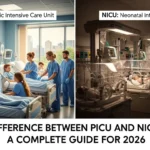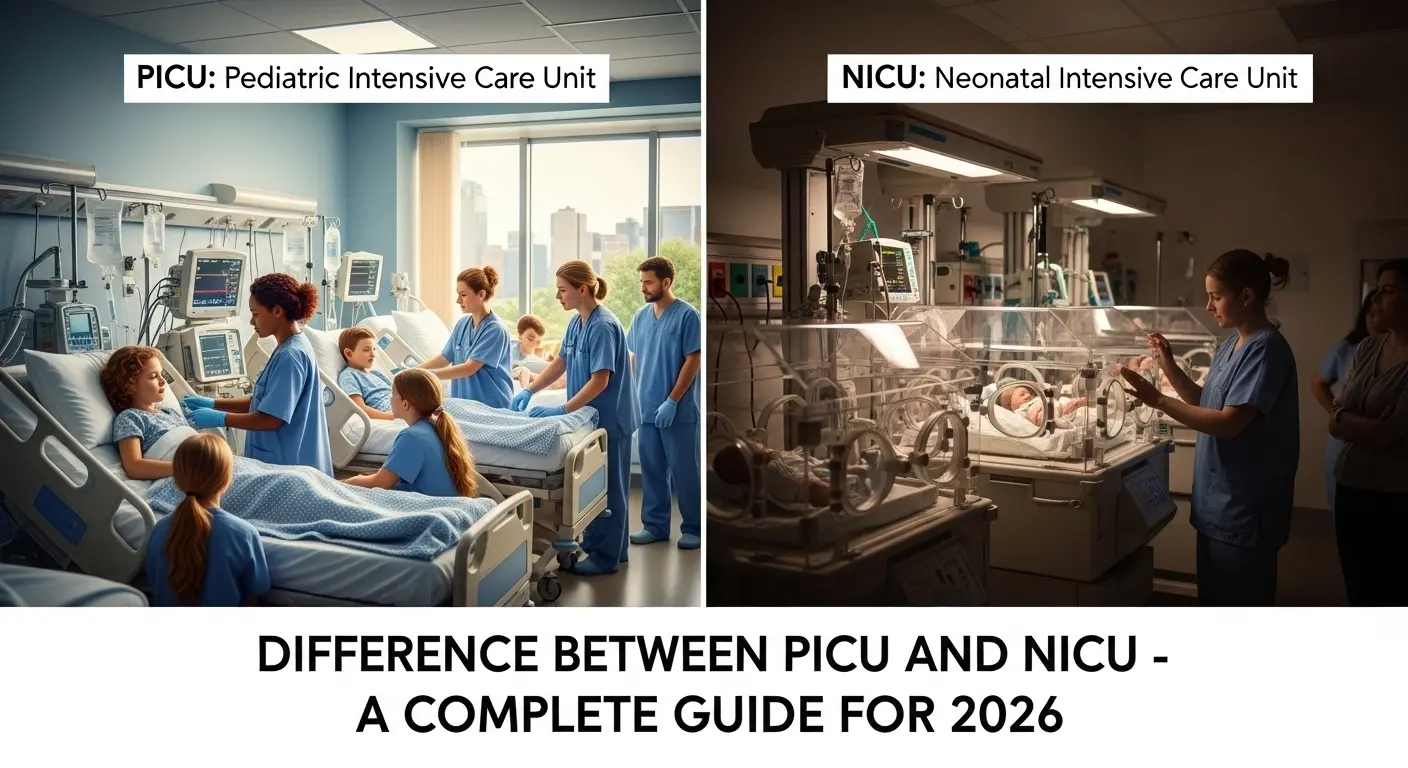
Imagine a worried parent rushing into a hospital, hearing doctors mention unfamiliar terms like PICU and NICU. In that emotional moment, understanding the difference between PICU and NICU becomes more than just medical knowledge it becomes deeply personal.
The difference between PICU and NICU lies in the type of patients they care for, yet many people confuse them due to similar environments and equipment.
Knowing the difference between PICU and NICU helps families make sense of critical care situations and prepares them for what lies ahead.
If you’re a student, a healthcare learner, or a concerned parent, understanding the difference between PICU and NICU can bring clarity during stressful times and support better communication with medical professionals.
Key Difference Between the Both
The main difference is simple:
- NICU (Neonatal Intensive Care Unit) cares for newborn babies, especially premature or critically ill infants.
- PICU (Pediatric Intensive Care Unit) treats older infants, children, and teenagers with serious health conditions.
Why Is Their Difference Important in Society?
Understanding PICU and NICU is crucial for both learners and experts because these units save lives at the most vulnerable stages. For families, it reduces fear and confusion during emergencies. For healthcare professionals, it ensures proper treatment pathways and resource allocation.
Society benefits as specialized care improves survival rates for newborns and children. Knowing their difference also enhances awareness about child healthcare systems and highlights the importance of advanced medical facilities.
Pronunciation (US & UK)
- PICU
- US: /ˈpɪk.juː/ → “PICK-you”
- UK: /ˈpɪk.juː/ → “PICK-you”
- NICU
- US: /ˈnɪk.juː/ → “NICK-you”
- UK: /ˈnɪk.juː/ → “NICK-you”
Difference Between PICU and NICU
1. Age Group
- NICU: Treats newborns (0–28 days old)
- Example 1: A premature baby born at 30 weeks
- Example 2: A newborn with breathing difficulty
- PICU: Treats children (1 month to 18 years)
- Example 1: A 5-year-old with severe asthma
- Example 2: A teenager after a serious accident
2. Type of Patients
- NICU: Focus on fragile newborns
- Example 1: Low birth weight infant
- Example 2: Baby with congenital disorder
- PICU: Handles critically ill children
- Example 1: Child with infection
- Example 2: Child with organ failure
3. Medical Equipment
- NICU: Specialized incubators and neonatal ventilators
- Example 1: Incubator for temperature control
- Example 2: Feeding tubes for infants
- PICU: Advanced machines for larger bodies
- Example 1: Ventilators for children
- Example 2: Cardiac monitors
4. Staff Specialization
- NICU: Neonatologists and neonatal nurses
- Example 1: Specialist for premature babies
- Example 2: Nurse trained in newborn care
- PICU: Pediatric intensivists
- Example 1: Doctor for child emergencies
- Example 2: Nurse for child ICU care
5. Common Conditions
- NICU: Prematurity, infections, birth defects
- Example 1: Jaundice in newborn
- Example 2: Underdeveloped lungs
- PICU: Trauma, infections, chronic diseases
- Example 1: Severe pneumonia
- Example 2: Brain injury
6. Duration of Stay
- NICU: Often longer stays
- Example 1: Weeks for premature babies
- Example 2: Months for complications
- PICU: Usually shorter but intensive
- Example 1: Few days after surgery
- Example 2: Short recovery period
7. Environment
- NICU: Quiet and controlled
- Example 1: Dim lighting
- Example 2: Minimal noise
- PICU: More active
- Example 1: Emergency responses
- Example 2: Frequent monitoring
8. Family Interaction
- NICU: Limited handling of babies
- Example 1: Controlled touching
- Example 2: Kangaroo care sessions
- PICU: More parental involvement
- Example 1: Parents can talk to child
- Example 2: Emotional support
9. Feeding Methods
- NICU: Tube feeding or IV
- Example 1: Feeding tube
- Example 2: IV nutrition
- PICU: Oral or assisted feeding
- Example 1: Liquid diet
- Example 2: Feeding support
10. Emotional Impact
- NICU: Stress about survival of newborn
- Example 1: Fear of complications
- Example 2: Anxiety for growth
- PICU: Stress about child recovery
- Example 1: Trauma recovery
- Example 2: Long-term illness concerns
Nature and Behaviour
- NICU: Calm, protective, and highly controlled environment focused on fragile life support.
- PICU: Dynamic, fast-paced, and responsive environment dealing with emergencies and recovery.
Why People Are Confused?
People confuse PICU and NICU because both are intensive care units with similar machines, alarms, and medical staff. The abbreviations also sound alike, making it harder for non-medical individuals to distinguish them.
Table: Difference and Similarity
| Feature | NICU | PICU | Similarity |
| Age Group | Newborns | Children | Both treat critical patients |
| Focus | Neonatal care | Pediatric care | Specialized treatment |
| Equipment | Baby-specific | Child-specific | Advanced technology |
| Staff | Neonatal specialists | Pediatric specialists | Highly trained teams |
| Environment | Quiet | Active | Intensive monitoring |
Which Is Better in What Situation?
NICU:
NICU is better for newborns who need immediate and specialized care after birth. Premature babies or those with complications benefit from NICU’s controlled environment and specialized neonatal support systems.
PICU:
PICU is ideal for older infants and children facing serious illnesses or injuries. It provides advanced life-saving treatments and continuous monitoring suited for growing bodies and complex conditions.
Metaphors and Similes
- NICU is like a “protective cocoon” for newborn life.
- PICU is like a “battlefield of recovery” where doctors fight to save young lives.
Connotative Meanings
- NICU:
- Positive: Care, protection
- Negative: Fragility, risk
- Neutral: Medical unit
- Example: “The NICU gave hope to the fragile newborn.”
- PICU:
- Positive: Strength, recovery
- Negative: Crisis, emergency
- Neutral: Intensive care
- Example: “The child was stable after PICU treatment.”
Idioms or Proverbs
(No direct idioms exist, but adapted phrases:)
- “In safe hands” The baby is in NICU.
- “Fighting for life” The child is in PICU.
Works in Literature
- NICU references:
- “The Premature Baby Book” Parenting/Medical William Sears – 2004
- PICU references:
- “Critical Care: A New Nurse Faces Death, Life, and Everything in Between” Memoir Theresa Brown 2010
Movies Related
- NICU themes:
- “Twice Born” 2012 Italy
- PICU themes:
- “My Sister’s Keeper” 2009 USA
FAQs:
1. What is the main difference between PICU and NICU?
NICU treats newborns, while PICU treats older children.
2. Can a baby move from NICU to PICU?
Yes, if the child grows older and still needs intensive care.
3. Which is more critical, PICU or NICU?
Both are critical but for different age groups.
4. Who works in NICU?
Neonatologists and neonatal nurses.
5. Why are both units important?
They save lives at different stages of childhood.
How Both Are Useful for Surroundings
Both PICU and NICU improve healthcare systems by reducing mortality rates among infants and children. They support families emotionally and medically, ensuring better survival and recovery outcomes in society.
Final Words
PICU and NICU are pillars of modern healthcare. Each plays a vital role in protecting life at different stages, ensuring that both newborns and children receive the best possible care.
Conclusion:
Understanding the difference between PICU and NICU is essential for anyone interacting with healthcare systems. While NICU focuses on newborns needing specialized neonatal care, PICU handles older children facing critical conditions. Both units are equally important, offering life-saving treatments tailored to age-specific needs.
Recognizing their roles not only reduces confusion but also builds awareness about advanced medical care. Ultimately, PICU and NICU symbolize hope, resilience, and the power of modern medicine to protect the most vulnerable lives.

I am an English language writer and editor with over 10 years of experience in explaining confusing English words, grammar rules, and word usage differences. I specialize in making complex language topics simple, clear, and practical for everyday readers.
At diffruli.com, I am helping learners to understand common English word differences such as spelling variations, similar meanings, and correct usage in American and British English. My writing style is reader-friendly, example-driven, and designed to improve confidence in written and spoken English.