In our daily lives, we often hear the terms independent and dependent, but do we truly understand their meanings? Imagine a college student living alone for the first time. They manage their finances, cook their meals, and make decisions this is someone independent.
On the other hand, a student relying on their parents for support, guidance, and allowances represents a dependent individual.
The concepts of independent and dependent are not only relevant in personal life but also in grammar, science, and psychology.
Understanding the difference between independent and dependent helps us analyze behavior, structure research, and interpret data correctly. Knowing when to act independently or dependently shapes our choices and relationships.
Pronunciation
/ɪnˈdɛpəndənt/ (US & UK)
/dɪˈpɛndənt/ (US & UK),
Difference Between Independent and Dependent
1. Definition
- Independent: Self-reliant; not needing support or control from others.
- Example 1: She is financially independent and pays all her bills herself.
- Example 2: The country declared itself independent after years of struggle.
- Dependent: Relying on someone or something else for support or survival.
- Example 1: Babies are dependent on their parents for food and care.
- Example 2: Many small businesses are dependent on local markets for survival.
2. Decision-Making
- Independent: Makes choices without external influence.
- Example: John decided to move abroad independently.
- Dependent: Decisions are influenced or made by others.
- Example: She chose her career path depending on her mentor’s advice.
3. Responsibility
- Independent: Accepts responsibility for actions and outcomes.
- Example: Independent researchers publish their own findings.
- Dependent: Responsibility is shared or guided by someone else.
- Example: Dependent employees follow instructions from their managers.
4. Financial Status
- Independent: Can sustain themselves financially.
- Example: Mary is independent and pays for her rent.
- Dependent: Requires financial support.
- Example: Teenagers are often dependent on their parents.
5. Emotional State
- Independent: Confident, self-assured, resilient.
- Example: Independent individuals cope well with challenges.
- Dependent: May feel insecure or need reassurance.
- Example: Dependent children seek constant approval from parents.
6. Learning and Growth
- Independent: Learns through exploration and self-effort.
- Example: Independent learners read books on their own.
- Dependent: Learns through guidance or instruction.
- Example: Dependent students follow their teacher’s notes closely.
7. Relationships
- Independent: Maintains autonomy in relationships.
- Example: Independent couples respect each other’s space.
- Dependent: Needs others for validation or support.
- Example: Dependent partners constantly seek approval.
8. Problem-Solving
- Independent: Tackles problems alone.
- Example: She solved the software issue independently.
- Dependent: Relies on others to solve issues.
- Example: He called tech support because he was dependent on help.
9. Social Behavior
- Independent: Comfortable being alone or self-sufficient socially.
- Example: Independent people enjoy solo travel.
- Dependent: Feels uneasy without social support.
- Example: Dependent individuals need friends to accompany them everywhere.
10. In Science and Research
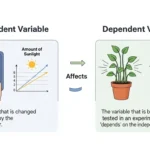
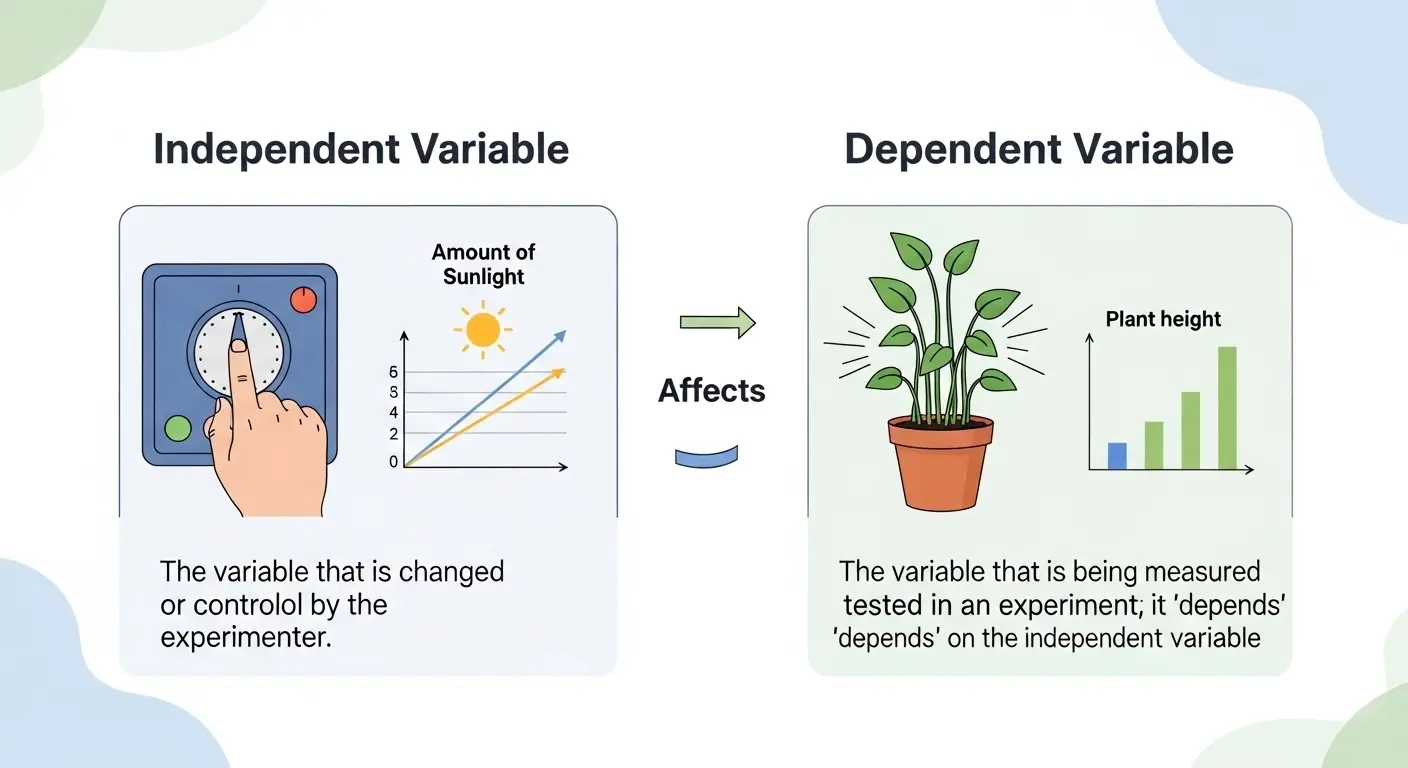
- Independent Variable: The factor that is manipulated in an experiment.
- Example: In a study on sunlight, the amount of sunlight is independent.
- Dependent Variable: The factor that changes in response.
- Example: Plant growth depends on sunlight; growth is the dependent variable.
Nature and Behavior
- Independent: Self-driven, confident, assertive, proactive.
- Dependent: Relies on guidance, supportive, cautious, reactive.
Why People Are Confused
Many confuse independent and dependent because both involve relationships and interactions. Context If emotional, financial, or grammatical determines the correct usage.
Comparison Table
| Aspect | Independent | Dependent | Similarity |
| Reliance | Self-reliant | Relies on others | Both describe levels of support |
| Decision-making | Autonomous | Guided | Affect choices in life |
| Responsibility | Self-accountable | Shared/Guided | Can influence outcomes |
| Emotional | Confident | Needs reassurance | Affects personal growth |
| Learning | Self-taught | Instruction-based | Both can learn effectively |
Which Is Better in What Situation?
Being independent is better when personal growth, self-confidence, or responsibility is needed. It encourages problem-solving and resilience. Conversely, being dependent is appropriate when learning, mentoring, or collaboration is involved. Dependency is valuable in early life, teams, or research guided by experienced individuals. Both traits complement each other in society and personal development.
Use in Metaphors and Similes
- Independent: “Like a lone eagle soaring high” symbolizes freedom and self-reliance.
- Dependent: “Like a vine clinging to a tree” symbolizes reliance and support.
Connotative Meaning
- Independent: Positive (self-reliant, confident).
- Dependent: Neutral/Negative (reliant, sometimes seen as weak).
- Example: “She became independent after years of dependence on her family.”
Idioms and Proverbs
- Independent: “Stand on your own two feet.” Example: After college, he learned to stand on his own two feet.
- Dependent: “Lean on someone.” Example: During tough times, she leaned on her friends for support.
Works in Literature
- “Pride and Prejudice” (Novel, Jane Austen, 1813) Themes of independence and dependence in social roles.
- “Little Women” (Novel, Louisa May Alcott, 1868) Explores women’s independence vs family dependence.
Movies Based on Themes
- “Erin Brockovich” (2000, USA) Independence and personal strength.
- “The Pursuit of Happiness’” (2006, USA) Overcoming dependence to achieve success.
FAQs:
- What is the main difference between independent and dependent?
- Independent means self-reliant, while dependent means relying on others.
- Can a person be both independent and dependent?
- Yes, in different contexts like emotionally independent but financially dependent.
- Which is better in relationships?
- Balance is key; independence maintains self-respect, dependence ensures care.
- Are independent and dependent always opposites?
- Often yes, but sometimes dependence is strategic or temporary.
- How do these terms apply in science?
- Independent variables are manipulated; dependent variables respond to change.
How Both Are Useful for Surroundings
Independent individuals contribute ideas, solutions, and leadership. Dependent individuals foster collaboration, teamwork, and learning. Together, they balance society, education, and work environments.
Final Words
Understanding independent and dependent helps in personal growth, professional life, and academics. Recognizing when to act independently or rely on others is essential for success and balance.
Conclusion:
The difference between independent and dependent extends beyond language it shapes behavior, choices, and social interactions. While independence builds confidence and resilience, dependence fosters collaboration and support.
Recognizing their roles in life, education, and research allows for better decision-making. Using these concepts wisely can improve personal growth, relationships, and professional outcomes. Understanding both traits ensures a balanced, productive, and socially aware life.

I am an English language writer and editor with over 10 years of experience in explaining confusing English words, grammar rules, and word usage differences. I specialize in making complex language topics simple, clear, and practical for everyday readers.
At diffruli.com, I am helping learners to understand common English word differences such as spelling variations, similar meanings, and correct usage in American and British English. My writing style is reader-friendly, example-driven, and designed to improve confidence in written and spoken English.