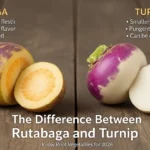
Rutabaga and turnip are two root vegetables that often confuse even the most seasoned cooks. Imagine walking through a farmer’s market: you see round, earthy vegetables with similar shapes and colors, and you wonder, “Which is which?”
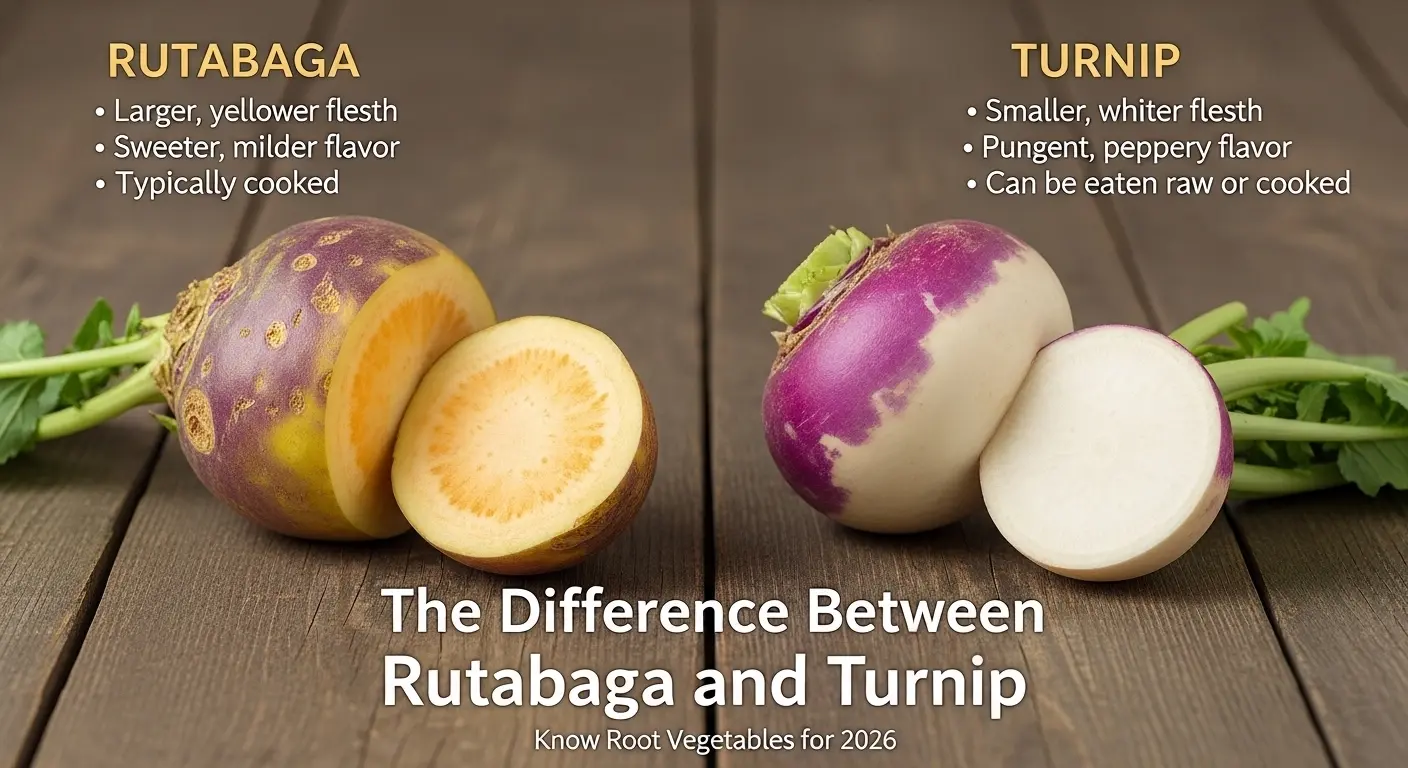
The rutabaga, slightly larger and with a sweeter taste, is often mistaken for the smaller, sharper turnip. Both vegetables have been staples in European and North American diets for centuries, offering essential nutrients like vitamin C, fiber, and antioxidants.
Understanding the difference between rutabaga and turnip not only helps in cooking but also improves your appreciation of seasonal produce.
By knowing their unique characteristics, you can make better culinary choices and enjoy richer flavors in your meals.
Pronunciation:
- Rutabaga – US: /ˈruːtəˌbeɪɡə/ | UK: /ˈruːtəbeɪɡə/
- Turnip – US: /ˈtɜːrnɪp/ | UK: /ˈtɜːnɪp/
Difference Between Rutabaga and Turnip
Here are 10 clear differences between rutabaga and turnip:
- Size
- Rutabaga is generally larger, often weighing 2–5 pounds.
- Example: A rutabaga in your soup might need 20 minutes to soften.
- Example: Large rutabagas are ideal for roasting whole.
- Turnip is smaller, usually 0.5–2 pounds.
- Example: A small turnip fits perfectly in a stew.
- Example: Baby turnips are great for salads.
- Rutabaga is generally larger, often weighing 2–5 pounds.
- Skin Texture
- Rutabaga has thick, rough, yellowish skin.
- Example: Rutabaga requires peeling before roasting.
- Example: Its skin protects it during long storage.
- Turnip has smooth, white to purple skin.
- Example: Turnips can be eaten with skin if tender.
- Example: Pickled turnips often retain their skin for color.
- Rutabaga has thick, rough, yellowish skin.
- Flavor
- Rutabaga tastes sweet, earthy, and mild.
- Example: Mashed rutabaga complements roasted meats.
- Example: Rutabaga in a soup adds subtle sweetness.
- Turnip has a sharp, slightly bitter taste.
- Example: Turnip greens enhance stir-fries with a peppery note.
- Example: Turnip soups have a zesty bite.
- Rutabaga tastes sweet, earthy, and mild.
- Flesh Color
- Rutabaga’s flesh is yellow-orange.
- Example: Its golden mash brightens winter meals.
- Example: Rutabaga gratin looks visually appealing in layers.
- Turnip’s flesh is white.
- Example: White turnip rounds in a stew absorb flavors quickly.
- Example: Pickled turnip maintains its whiteness for aesthetics.
- Rutabaga’s flesh is yellow-orange.
- Growth Period
- Rutabaga takes longer to grow, about 90–120 days.
- Example: Farmers plant rutabaga in early summer for autumn harvest.
- Example: Late-season roasting vegetables often include rutabaga.
- Turnip matures quickly, around 50–60 days.
- Example: Turnips can be harvested multiple times in one season.
- Example: Quick-growing turnips are perfect for spring planting.
- Rutabaga takes longer to grow, about 90–120 days.
- Origin
- Rutabaga originated in Scandinavia as a cross between cabbage and turnip.
- Example: Traditional Swedish dishes often feature rutabaga.
- Example: Norway preserves rutabaga for winter use.
- Turnip originated in Europe and Asia.
- Example: Ancient Roman diets included turnips.
- Example: Turnips were staples in medieval European cuisine.
- Rutabaga originated in Scandinavia as a cross between cabbage and turnip.
- Storage Life
- Rutabaga stores longer, up to 4–6 months in cool conditions.
- Example: Rutabaga is ideal for winter root cellars.
- Example: Pre-cut rutabaga freezes well for later use.
- Turnip stores 1–2 months at best.
- Example: Turnips should be consumed quickly to avoid bitterness.
- Example: Fresh turnip greens wilt faster than rutabaga leaves.
- Rutabaga stores longer, up to 4–6 months in cool conditions.
- Nutritional Value
- Rutabaga has more carbohydrates, providing energy and sweetness.
- Example: Rutabaga mash is hearty for cold days.
- Example: Sweet rutabaga stews satisfy appetite naturally.
- Turnip is lower in calories but rich in antioxidants.
- Example: Turnip greens are excellent for detox salads.
- Example: Turnip soup is low-calorie yet flavorful.
- Rutabaga has more carbohydrates, providing energy and sweetness.
- Culinary Use
- Rutabaga is ideal for mashing, roasting, and baking.
- Example: Rutabaga pie is a seasonal favorite.
- Example: Roasted rutabaga cubes pair well with root vegetables.
- Turnip is better for stews, pickling, and stir-fries.
- Example: Pickled turnip adds tang to Mediterranean dishes.
- Example: Turnip slices in stir-fried meals stay crunchy.
- Rutabaga is ideal for mashing, roasting, and baking.
- Common Confusion
- Rutabaga is often mistaken for turnip due to shape.
- Example: Some recipes calling for turnip may use rutabaga interchangeably.
- Example: Grocery labeling errors often cause mix-ups.
- Turnip is smaller but visually similar to rutabaga.
- Example: Turnip soups sometimes taste sweeter if rutabaga is used.
- Example: Stews may have inconsistent flavors due to confusion.
Nature and Behaviour
- Rutabaga: Sturdy, long-lasting, and sweet; thrives in cooler climates.
- Turnip: Tender, quick-growing, slightly sharp; prefers spring or autumn planting.
Why People Are Confused
People confuse rutabaga and turnip because of their similar round shapes and overlapping culinary uses. Additionally, stores often mislabel them, increasing the ambiguity.
Comparison Table
| Feature | Rutabaga | Turnip | Similarity |
| Size | Large | Small | Both are root vegetables |
| Skin | Rough, yellow | Smooth, white/purple | Edible skin |
| Flavor | Sweet | Sharp | Used in soups and stews |
| Flesh | Yellow | White | Can be roasted or mashed |
| Growth | Slow | Fast | Cool-season crops |
| Storage | 4–6 months | 1–2 months | Cold storage possible |
| Calories | Higher | Lower | Nutrient-rich |
| Culinary Use | Mash, roast | Pickle, stew | Versatile in recipes |
| Origin | Scandinavia | Europe/Asia | Ancient staple foods |
| Confusion | Often mistaken | Often mistaken | Similar appearance |
Which Is Better in What Situation?
Rutabaga: Perfect for roasting, mashing, or long-term storage during winter. Its natural sweetness balances savory dishes beautifully.
Turnip: Ideal for quick meals like stews, pickles, and salads. Its sharp flavor enhances fresh, tangy recipes.
Metaphors and Similes
- Rutabaga: “As comforting as a rutabaga stew on a cold night.” (Positive)
- Turnip: “Turning like a bitter turnip in life.” (Neutral/negative)
Idioms and Proverbs
- “Small but mighty like a turnip” highlights underestimated value.
- “Sweet as a rutabaga” emphasizes hidden sweetness in something plain.
Works in Literature
- The Tale of the Turnip (Children’s story, 1910)
- Rutabaga Stew Recipes (Cookbook, 1954)
Movies
- The Turnip Adventure (1987, UK)
- Rutabaga Harvest (1999, Sweden)
FAQs:
- Are rutabaga and turnip the same?
No, they differ in size, taste, and texture. - Which is sweeter?
Rutabaga is sweeter; turnip is sharper. - Can they be used interchangeably?
Sometimes, but it may affect flavor. - Which stores longer?
Rutabaga stores longer than turnip. - Do both have edible greens?
Yes, both greens are nutritious.
Environmental Use
Both enrich soil when composted and provide winter food for wildlife. Their leaves and roots help in crop rotation and soil health.
Final Words
Rutabaga and turnip, though similar, each bring unique flavor, nutrition, and culinary benefits. Recognizing their differences enhances cooking and agricultural knowledge.
Conclusion:
Understanding the difference between rutabaga and turnip is crucial for cooks, gardeners, and nutrition enthusiasts. Rutabaga’s sweet, hearty flavor complements roasting and mashing, while turnip’s sharp taste enhances soups, stews, and pickling. By learning their characteristics, storage needs, and culinary uses, individuals can make informed choices that improve both meals and gardening outcomes.
Their historical significance, environmental contributions, and adaptability make them indispensable root vegetables. Clear knowledge of rutabaga and turnip ensures richer flavors, better nutrition, and less confusion in the kitchen.

I am an English content writer with more than 8 years of experience in writing about English word differences, grammar clarity, and everyday language usage. I am passionate about helping learners avoid common mistakes caused by similar-looking or confusing English words.
At diffruli.com, I write easy-to-understand guides that explain the difference between commonly confused words, spelling variations, and correct usage with real-life examples. My content is especially useful for students, writers, and non-native English speakers who want quick, accurate, and practical answers.