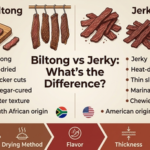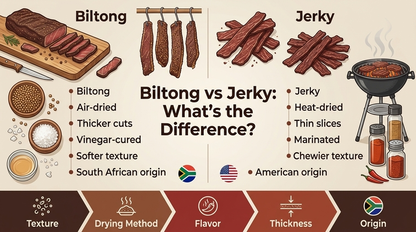
“Biltong” is air-dried, cured meat that originated in South Africa and is usually thicker and less sweet, while “jerky” is seasoned, marinated, and dried meat (often smoked) that is more common in United States.
Imagine you’re on a long road trip, and you stop at a roadside store looking for a quick, protein-packed snack. You see two options: biltong and jerky. Both look similar: dried strips of meat, rich in flavor, and perfect for on-the-go eating. But are they the same? This is where the confusion begins.
Many people search for the difference between biltong and jerky because they appear alike but differ in preparation, taste, and origin.
Understanding the difference between biltong and jerky helps not only food lovers but also nutrition-conscious individuals make better choices.
While both snacks are beloved worldwide, their unique qualities set them apart. In this article, we’ll explore the difference between biltong and jerky in depth so you can confidently choose the right one for your needs.
Key Difference Between the Both
The main difference lies in preparation: biltong is air-dried, while jerky is cooked or smoked. This affects their taste, texture, and nutritional value.
Why Is Their Difference Important to Know?
Knowing the difference between biltong and jerky is essential for both learners and experts in food science, nutrition, and culinary arts. For consumers, it helps in making healthier snack choices. For professionals, it enhances understanding of preservation techniques and cultural food traditions. In society, these products represent innovation in food storage and global culinary diversity.
Pronunciation (US & UK)
- Biltong
- US: /ˈbɪl.tɔːŋ/
- UK: /ˈbɪl.tɒŋ/
- Jerky
- US: /ˈdʒɜːr.ki/
- UK: /ˈdʒɜː.ki/
Difference Between Biltong and Jerky
1. Origin
- Biltong comes from South Africa.
- Example 1: Traditional South African farmers made biltong.
- Example 2: It is common in African markets.
- Jerky originates from North and South America.
- Example 1: Native Americans preserved meat as jerky.
- Example 2: It became popular in the United States.
2. Preparation Method
- Biltong is air-dried.
- Example 1: Meat hangs in open air.
- Example 2: No heat is applied.
- Jerky is cooked or smoked.
- Example 1: Meat is heated in ovens.
- Example 2: Smoking adds flavor.
3. Ingredients
- Biltong uses vinegar and spices.
- Example 1: Coriander is common.
- Example 2: Salt and vinegar cure the meat.
- Jerky uses marinades and sauces.
- Example 1: Soy sauce is used.
- Example 2: Sugar-based marinades are common.
4. Texture
- Biltong is thicker and softer.
- Example 1: It can be chewy inside.
- Example 2: Sometimes slightly moist.
- Jerky is thin and dry.
- Example 1: It is tough to chew.
- Example 2: Often brittle.
5. Flavor
- Biltong has a natural meat taste.
- Example 1: Less sweet.
- Example 2: More savory.
- Jerky is sweet and smoky.
- Example 1: Sweet BBQ flavor.
- Example 2: Spicy variations exist.
6. Drying Time
- Biltong takes several days.
- Example 1: Slow air drying.
- Example 2: Controlled environment.
- Jerky is made quickly.
- Example 1: Oven drying in hours.
- Example 2: Industrial production is fast.
7. Fat Content
- Biltong may contain fat.
- Example 1: Fat enhances flavor.
- Example 2: Some cuts are fatty.
- Jerky is lean.
- Example 1: Fat is removed.
- Example 2: Lean meat dries better.
8. Nutritional Value
- Biltong is high in protein and fat.
- Example 1: Suitable for keto diets.
- Example 2: More calories.
- Jerky is high in protein but lower in fat.
- Example 1: Lower calorie snack.
- Example 2: Often contains sugar.
9. Preservation Technique
- Biltong uses vinegar curing.
- Example 1: Prevents bacteria.
- Example 2: Natural preservation.
- Jerky uses heat.
- Example 1: Kills bacteria.
- Example 2: Extends shelf life.
10. Cultural Significance
- Biltong is a traditional African snack.
- Example 1: Common in South African homes.
- Example 2: Cultural heritage food.
- Jerky is a global snack.
- Example 1: Found in supermarkets worldwide.
- Example 2: Popular among hikers.
Nature and Behaviour
- Biltong: Natural, less processed, richer in taste.
- Jerky: Processed, flavored, and widely commercialized.
Why Are People Confused?
People are confused because both look similar dried meat strips. Their packaging and use as snacks also overlap, making it hard to distinguish without deeper knowledge.
Comparison Table
| Feature | Biltong | Jerky |
| Origin | South Africa | America |
| Method | Air-dried | Cooked/Smoked |
| Taste | Savory | Sweet/Smoky |
| Texture | Soft & thick | Dry & thin |
| Fat | Higher | Lower |
| Similarity | Both are dried meat snacks | High-protein food |
Which Is Better in What Situation?
Biltong:
Biltong is better when you want a natural and less processed snack. It suits people following high-fat diets like keto. Its rich flavor and soft texture make it ideal for gourmet snacking.
Jerky:
Jerky is better for long trips and convenience. It lasts longer and is widely available. Its sweet and smoky taste appeals to a broader audience, especially those who prefer ready-to-eat snacks.
Metaphors and Similes
- “Tough as jerky” (describing something very hard)
- “Rich like biltong” (describing something flavorful)
Connotative Meaning
- Biltong: Positive (natural, traditional)
- Example: “He prefers biltong for its authentic taste.”
- Jerky: Neutral to positive (convenient, modern)
- Example: “She packed jerky for the trip.”
Idioms or Proverbs
- “Chew the jerky slowly” (figurative: be patient)
- Example: “In business, chew the jerky slowly before making decisions.”
(Biltong has fewer idiomatic uses due to cultural specificity.)
Works in Literature
- Jerky Road Adventures (Travel, John Smith, 2015)
- Taste of Africa: Biltong Stories (Cultural, A. Ndlovu, 2018)
Movies Related to Keywords
- Jerky Boys (1995, USA)
- The Biltong Hunter (2017, South Africa)
FAQs
1. Is biltong healthier than jerky?
Yes, biltong is often healthier due to less sugar and fewer additives.
2. Can jerky be made at home?
Yes, using ovens or dehydrators.
3. Why is biltong softer?
Because it is air-dried, not cooked.
4. Does jerky last longer?
Yes, due to heat processing and preservatives.
5. Are both high in protein?
Yes, both are excellent protein sources.
How Both Are Useful for Surroundings
Both biltong and jerky help reduce food waste by preserving meat. They are also practical for travel, emergencies, and outdoor activities.
Final Words
Biltong and jerky may look alike, but their differences make each unique. One represents tradition and natural preparation, while the other showcases convenience and modern processing.
Conclusion
In conclusion, understanding the difference between biltong and jerky allows you to appreciate their unique qualities. While both are excellent protein-rich snacks, their origins, preparation methods, and flavors set them apart. Biltong offers a more natural and traditional experience, whereas jerky provides convenience and variety. If you prefer the rich, savory taste of biltong or the sweet, smoky flavor of jerky, knowing their differences ensures you make the right choice for your lifestyle and taste preferences.

I am an English content writer with more than 8 years of experience in writing about English word differences, grammar clarity, and everyday language usage. I am passionate about helping learners avoid common mistakes caused by similar-looking or confusing English words.
At diffruli.com, I write easy-to-understand guides that explain the difference between commonly confused words, spelling variations, and correct usage with real-life examples. My content is especially useful for students, writers, and non-native English speakers who want quick, accurate, and practical answers.