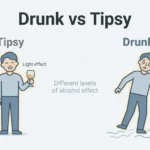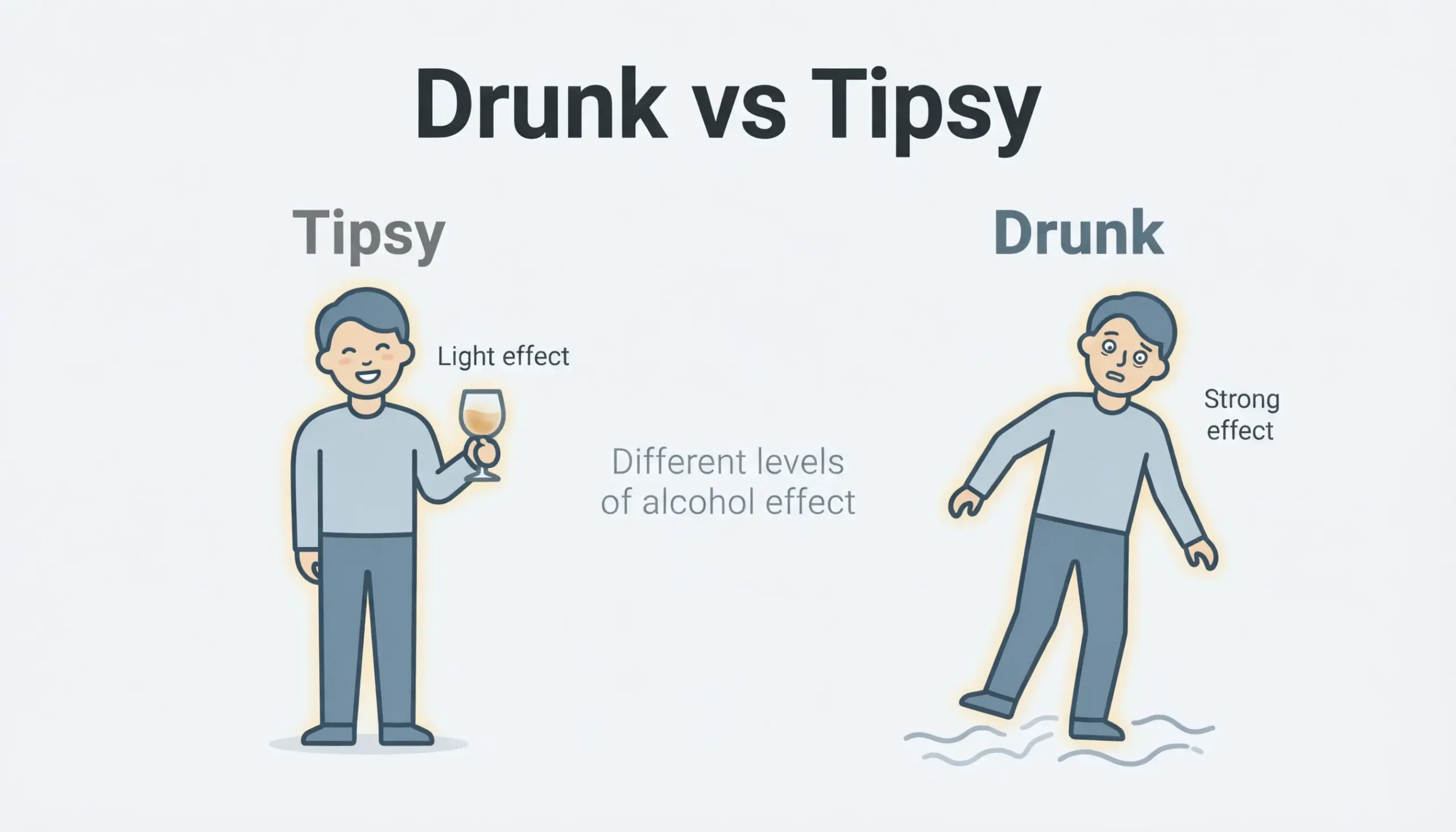
“The difference between drunk and tipsy is about alcohol level and control. Tipsy means a person feels light effects of alcohol but still has control. Drunk means stronger effects, less control, and poor judgment. Tipsy is the early stage, while drunk is the stronger stage.
Have you ever seen someone after drinking and wondered, “Are they tipsy or drunk?” Many people use these words like they mean the same thing. But they do not. That is why many people search for the difference between drunk and tipsy.
Both words talk about how alcohol affects the body and mind. But the level is not the same. A tipsy person feels light effects. A drunk person feels much stronger effects.
Knowing the difference matters. It can help you understand your body, stay safe, and make better choices. It also helps you know when someone may need help.
In this guide, you will learn drunk vs tipsy in very simple words. We will compare both, share real-life examples, and help you understand which stage is which.
What Is Tipsy?
Tipsy means a person has had some alcohol and feels its early effects.
It is the first stage after drinking.
A tipsy person may:
- Feel happy
- Talk more
- Laugh more
- Feel warm
- Feel relaxed
But they can still think and move well.
For example, if Ali drinks one glass of wine and starts talking more than usual, he may be tipsy.
Key point: Tipsy is light.
What Is Drunk?
Drunk means alcohol has a strong effect on the body and brain.
This is a stronger stage than tipsy.
A drunk person may:
- Walk badly
- Talk unclearly
- Feel dizzy
- Make bad choices
- Forget things
For example, if Ahmed drinks many beers and cannot walk straight, he is drunk.
Key point: Drunk is heavy.
Difference Between Drunk and Tipsy
| Feature | Tipsy | Drunk |
| Meaning | Light alcohol effect | Strong alcohol effect |
| Use | Early drinking stage | Heavy drinking stage |
| Features | Happy, relaxed, social | Dizzy, confused, weak control |
| Purpose | Casual fun feeling | Not a purpose, happens after too much alcohol |
Key Differences Explained
Control
A tipsy person still has control.
They can talk, walk, and think normally.
A drunk person loses control.
They may fall or say things they do not mean.
Real example:
Sara had one drink at dinner. She was tipsy and laughing.
After four more drinks, she became drunk and could not walk well.
Thinking
Tipsy people can still make okay choices.
Drunk people often make poor choices.
Real example:
A tipsy person may order food.
A drunk person may lose their wallet.
Body Movement
Tipsy people move almost normally.
Drunk people may stumble.
Real example:
A tipsy person dances fine.
A drunk person may fall while dancing.
Speech
Tipsy people talk more.
Drunk people may slur words.
Real example:
Tipsy: talking fast.
Drunk: hard to understand.
Safety
Tipsy is still risky.
Drunk is much more risky.
Real example:
Driving while tipsy is dangerous.
Driving while drunk is very dangerous and illegal in many places.
Examples of Drunk vs Tipsy
Here are simple examples:
Tipsy example:
John had two small drinks at a party. He felt happy and social. He was tipsy.
Drunk example:
John had six more drinks. He became loud and could not stand well. He was drunk.
Tipsy example:
Maria had one cocktail at dinner. She felt relaxed.
Drunk example:
Maria drank too much and forgot her bag at the restaurant.
These examples help show the difference between drunk and tipsy.
Importance of Knowing the Difference
Knowing the difference is very important.
It helps you:
- Stay safe
- Stop drinking at the right time
- Help friends
- Avoid bad choices
If you know you are tipsy, you may stop before getting drunk.
If someone is drunk, they may need help getting home safely.
This knowledge can protect lives.
Benefits of Understanding Drunk vs Tipsy
Learning drunk vs tipsy helps in many ways.
Better Decisions
You can know when to stop drinking.
Less Confusion
You will understand what your body feels.
Smarter Choices
You can avoid risky actions.
Practical Knowledge
It helps in parties, events, and social life.
For example, if your friend says, “I am just tipsy,” you may know if they are really drunk.
Common Mistakes People Make
Many people make mistakes about drunk and tipsy.
Thinking They Are the Same
They are not the same.
Tipsy is lighter.
Drunk is stronger.
Thinking Tipsy Is Safe
Tipsy still affects the brain.
It can still be risky.
Ignoring Signs
Some people do not notice when tipsy becomes drunk.
This can be dangerous.
Drinking Too Fast
Fast drinking can move a person from tipsy to drunk quickly.
Simple correction: Drink slowly and know your limit.
Real-Life Use
Where do we use these words?
Social Events
At parties, people often say tipsy or drunk.
Example: “He is tipsy after one drink.”
Movies
Movies often show drunk characters.
Example: a character walking badly.
Daily Talk
Friends use these words in normal talks.
Example: “I got tipsy at dinner.”
Safety Talks
Doctors and teachers talk about drinking risks.
Knowing the right word matters.
Easy Trick to Remember the Difference
Here is a simple trick:
Tipsy = Tiny effect
Both start with “T”
This helps you remember tipsy is the small stage.
Drunk = Deep effect
Both start with “D”
This helps you remember drunk is the stronger stage.
Easy memory rule:
Tipsy comes first.
Drunk comes later.
Which One Is Better? Drunk or Tipsy?
Many ask, which is better drunk or tipsy?
The honest answer depends on the situation.
Tipsy is the lighter stage. It has less effect.
Drunk is the stronger stage and has more risks.
If someone drinks, staying at the tipsy stage is safer than getting drunk.
But even being tipsy needs care.
It is always best to drink responsibly or not drink at all.
So in the drunk vs tipsy debate, neither is “better.” Safety matters most.
FAQs
1. What is the difference between drunk and tipsy?
Tipsy is a light alcohol effect. Drunk is a stronger alcohol effect with less control.
2. Which is better, drunk or tipsy?
Tipsy is lighter and less risky, but both need care.
3. Why are drunk and tipsy confused?
Both happen after drinking alcohol, so people mix them up.
4. Are drunk and tipsy the same?
No. Tipsy is the early stage. Drunk is the stronger stage.
5. When do you use tipsy?
Use tipsy when someone feels light alcohol effects.
6. Which is more useful to know?
Both are useful because they help you understand drinking stages.
7. Which is easier to understand?
Tipsy is easier because it means a small change. Drunk means bigger changes.
Conclusion
The difference between drunk and tipsy is simple when you break it down. Tipsy means the alcohol effect is light. A person may feel happy, relaxed, and more social. Drunk means the alcohol effect is stronger. A person may lose control, feel dizzy, and make poor choices.
Understanding drunk vs tipsy helps you stay safe and make smart choices. It also helps you understand your friends and know when someone may need help. Many people confuse these two words, but now you know the real meaning.
The easy rule is this: tipsy comes first, drunk comes later. That is the simplest way to remember the difference between drunk and tipsy. Knowing this can make social situations safer and clearer for everyone.

I am an English language writer and editor with over 10 years of experience in explaining confusing English words, grammar rules, and word usage differences. I specialize in making complex language topics simple, clear, and practical for everyday readers.
At diffruli.com, I am helping learners to understand common English word differences such as spelling variations, similar meanings, and correct usage in American and British English. My writing style is reader-friendly, example-driven, and designed to improve confidence in written and spoken English.