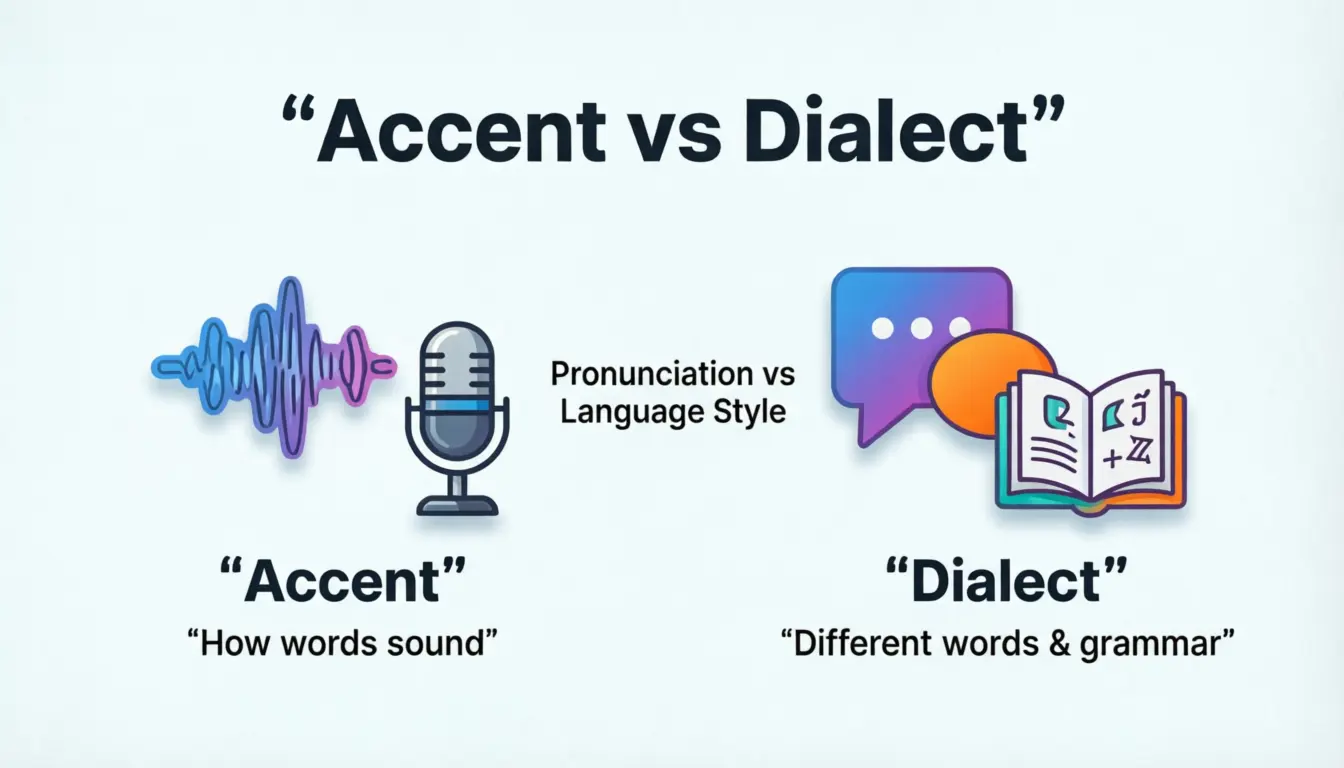
“The difference between accent and dialect is simple. An accent changes only the way words sound. A dialect changes pronunciation, grammar, and vocabulary. For example, American and British English have different accents, while regional forms of English with unique words and grammar are dialects.
Have you ever heard two people speak the same language in different ways? One person may sound British, while another sounds American. Some people also use different words or grammar. This is where many people get confused about the difference between accent and dialect.
Many learners think accent and dialect mean the same thing. But they are not the same. An accent changes how words sound. A dialect changes how people speak, write, and use language.
People search for “accent vs dialect” because they want a simple answer. Students, travelers, English learners, and even teachers often mix these two terms. Knowing the difference helps you understand people better and speak with more confidence.
In this article, you will learn what accent and dialect mean, how they are different, real-life examples, common mistakes, and which one matters more in daily life.
What Is Accent?
An accent is the way a person pronounces words.
It changes the sound of speech but not the meaning of words or grammar rules.
People usually get an accent from the place where they grow up.
Key Features of Accent
- Changes pronunciation
- Does not change grammar
- Does not change sentence structure
- Shows where a person may come from
Real-Life Example
A person from the United States may say “water” differently from a person in Australia. Both speak English, but their accents sound different.
What Is Dialect?
A dialect is a form of language used by a group of people in a certain area or community.
It changes pronunciation, vocabulary, and grammar.
A dialect is bigger than an accent because it affects more parts of language.
Key Features of Dialect
- Changes pronunciation
- Changes grammar
- Changes words and phrases
- Often linked to a region or culture
Real-Life Example
In some parts of the UK, people may say “I am going home,” while others say “I’m gan yam.” The words and grammar are different. That is a dialect.
Difference Between Accent and Dialect
| Feature | Accent | Dialect |
| Meaning | Way of pronouncing words | Form of language used by a group |
| Use | Changes sound only | Changes sound, grammar, and words |
| Features | Pronunciation | Pronunciation, vocabulary, grammar |
| Purpose | Shows speaking style or region | Shows language variety and culture |
Key Differences Explained
Pronunciation
Accent mainly changes pronunciation.
People may say the same word in different ways.
For example, a British person may pronounce “dance” differently from an American person.
Dialect also changes pronunciation, but it changes other language parts too.
Grammar
Accent does not change grammar.
A person with a French accent may still use correct English grammar.
Dialect can change grammar rules.
For example, some dialects may use different sentence patterns like “He don’t know” instead of “He doesn’t know.”
Vocabulary
Accent does not usually change vocabulary.
Dialect often uses different local words.
For example:
- Americans say “truck”
- British people say “lorry”
This vocabulary difference is part of dialect.
Region and Culture
Accent often shows where someone is from.
Dialect shows both location and culture.
A dialect may include local sayings, special words, and unique grammar styles.
Communication
People with different accents can usually understand each other easily.
Different dialects may sometimes create confusion because words and grammar can change.
For example, a strong regional dialect may sound very different from standard English.
Examples
Here are some simple real-world examples of accent vs dialect.
Accent Example
A person from India and a person from Canada both speak English.
Their pronunciation sounds different.
This is an accent difference.
Dialect Example
A person from Scotland may use local words and grammar that are different from standard English.
This is a dialect difference.
Another Accent Example
Two Americans from New York and Texas may sound different.
Their pronunciation changes, but the grammar stays mostly the same.
Another Dialect Example
In some English dialects, people say “y’all” instead of “you all.”
This changes vocabulary and speech style.
Importance of Knowing the Difference
Understanding the difference between accent and dialect is important.
It helps people communicate better.
It also reduces confusion when learning English or another language.
Students can improve listening skills.
Travelers can understand local speech more easily.
Teachers can explain language differences clearly.
Knowing this difference also helps people respect other cultures and speaking styles.
Benefits of Understanding Accent vs Dialect
There are many benefits to learning accent vs dialect.
Better Communication
You can understand people from different places more easily.
Less Confusion
You will not mix pronunciation with grammar differences.
Smarter Language Learning
Language learners can focus on the right skills.
For example:
- Accent training helps pronunciation
- Dialect learning helps full communication
More Confidence
You may feel more comfortable speaking with people from different cultures.
Practical Knowledge
This knowledge is useful in school, travel, business, and online communication.
Common Mistakes People Make
Many people confuse accent and dialect.
Here are some common mistakes.
Thinking They Are the Same
This is the biggest mistake.
Accent is only about sound.
Dialect includes grammar and vocabulary too.
Believing One Accent Is Better
No accent is better than another.
Every accent reflects a person’s background and identity.
Thinking Dialects Are Wrong
Dialects are not incorrect language.
They are natural language forms used by communities.
Ignoring Cultural Meaning
Both accent and dialect can show culture and history.
They are important parts of identity.
Real-Life Use
Accent and dialect matter in many daily situations.
In Schools
Teachers help students understand different ways of speaking.
In Movies and TV Shows
Actors use accents and dialects to match characters.
In Travel
Travelers hear many accents and dialects in different countries.
In Business
Good communication helps workers understand clients and coworkers from different places.
In Language Learning
English learners often study accents like American or British English.
They may also learn local dialects to understand native speakers better.
Easy Trick to Remember the Difference
Here is a simple memory trick.
Accent = Audio
Both words start with “A.”
Accent changes audio or sound.
Dialect = Different Language Style
Dialect changes more than sound.
It changes words, grammar, and speaking style.
This trick makes the difference easier to remember.
Which One Is Better?
Many people ask, “Which is better accent or dialect?”
The answer depends on the situation.
Accent is important for clear pronunciation.
Dialect is important for full communication and local understanding.
Neither one is better than the other.
Both are useful in different ways.
If you want to sound natural, focus on accent.
If you want to understand culture and local speech, learn dialect.
FAQs
What is the difference between accent and dialect?
An accent changes pronunciation only. A dialect changes pronunciation, grammar, and vocabulary.
Which is better accent or dialect?
Neither is better. Both are useful for communication and understanding language.
Why are accent and dialect confused?
People confuse them because both relate to speaking styles and regional language differences.
Are accent and dialect the same?
No. Accent affects sound only, while dialect affects many parts of language.
When should I use accent or dialect?
Use “accent” when talking about pronunciation. Use “dialect” when talking about language style, grammar, or vocabulary.
Which is more useful?
It depends on your goal. Accent helps pronunciation. Dialect helps deeper communication and cultural understanding.
Which is easier to understand?
A familiar accent is usually easier to understand. Strong dialects may sometimes be harder because they use different words and grammar.
Conclusion
The difference between accent and dialect becomes easy once you understand the basics. Accent is about how words sound. Dialect is about the full way people use language, including pronunciation, grammar, and vocabulary.
This is why accent vs dialect is an important topic for students, travelers, and language learners. Knowing the difference helps you communicate better and understand people from many places. It also helps reduce confusion when learning English or hearing new speaking styles.
Remember this simple idea: accent changes sound, while dialect changes language style. Both are natural parts of communication and culture. Neither one is wrong or better. They simply show how people speak in different places and communities.
By understanding the difference between accent and dialect, you can become a more confident speaker and listener in everyday life.

I am an English language writer and editor with over 10 years of experience in explaining confusing English words, grammar rules, and word usage differences. I specialize in making complex language topics simple, clear, and practical for everyday readers.
At diffruli.com, I am helping learners to understand common English word differences such as spelling variations, similar meanings, and correct usage in American and British English. My writing style is reader-friendly, example-driven, and designed to improve confidence in written and spoken English.