“The difference between rambutan and lychee is mostly in their skin, taste, and texture. Rambutan has hairy red skin and soft sweet flesh. Lychee has rough pink-red skin and a lighter floral taste. Both fruits are tropical, juicy, and healthy, but they look and taste slightly different.
Have you ever seen a strange red fruit with hairy skin and wondered if it was a lychee? Many people mix up rambutan and lychee because both fruits look similar at first. They are sweet, juicy, and popular in Asian countries. You may also see them in stores, fruit markets, or desserts.
That is why many people search for the difference between rambutan and lychee. They want to know which fruit tastes better, which is healthier, and how each one is used.
Both fruits are tropical and full of flavor, but they are not the same. They look different on the outside and have small differences in taste and texture too.
In this guide, you will learn what rambutan and lychee are, how they compare, and which one may be better for your needs. The explanations are simple and easy to understand.
What Is Rambutan?
Rambutan is a tropical fruit that grows in warm countries like Thailand, Malaysia, and Indonesia.
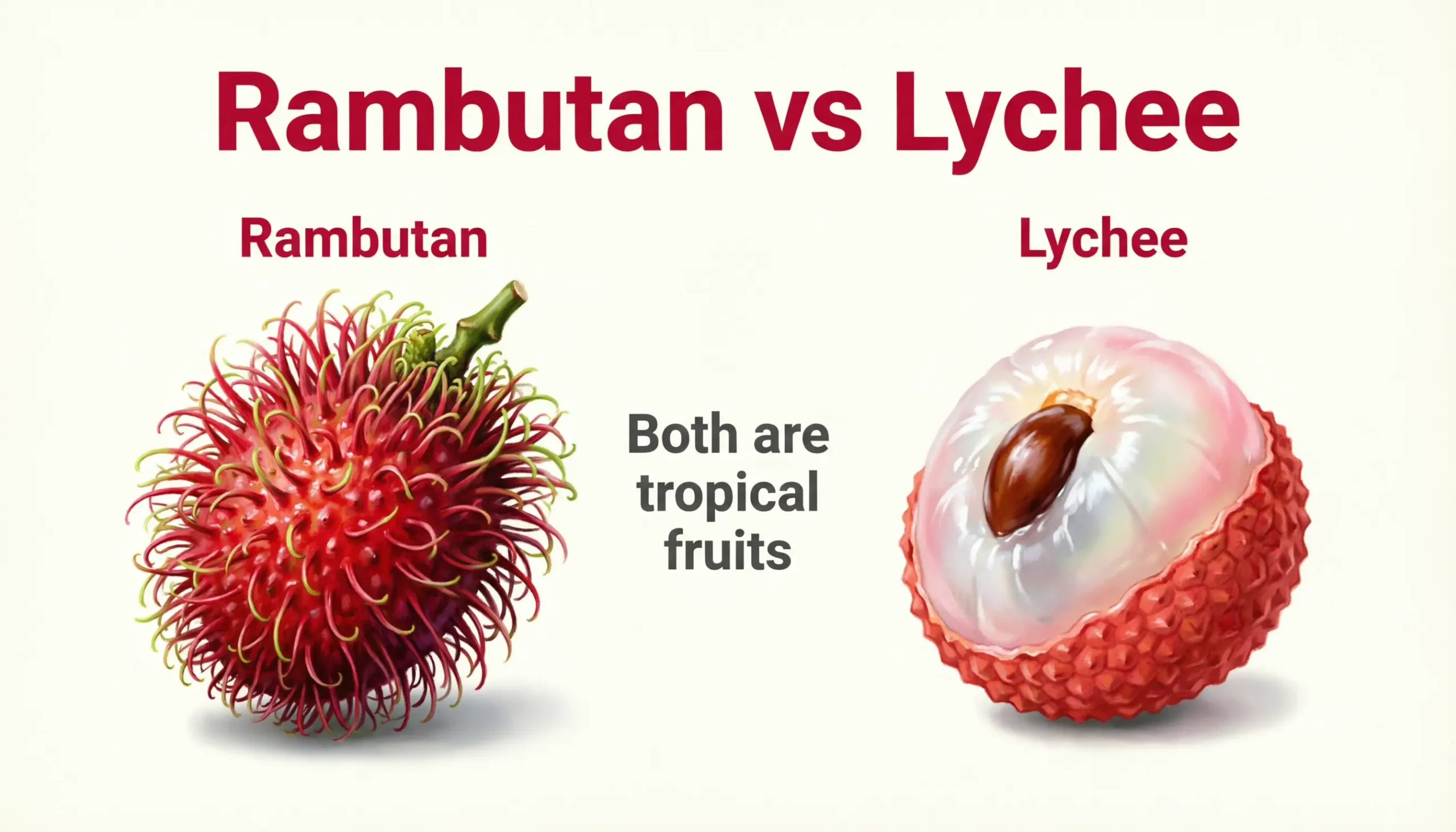
It has red or yellow skin with soft hair-like spikes outside. Inside, the fruit is white, juicy, and sweet.
The name “rambutan” comes from a word that means “hair” because of its hairy skin.
Key Features of Rambutan
- Hairy outer skin
- Sweet and creamy taste
- White juicy flesh
- Large seed in the center
- Tropical fruit
Real-Life Example
People often eat rambutan as a fresh snack during hot weather. It is also used in fruit salads and sweet desserts.
What Is Lychee?
Lychee is another tropical fruit that comes mostly from China and nearby Asian countries.
It has rough pink or red skin without hair. Inside, the fruit is soft, juicy, and very sweet.
Lychee is famous for its light floral smell and refreshing taste.
Key Features of Lychee
- Rough red or pink skin
- Sweet floral flavor
- Juicy white flesh
- Brown seed in the center
- Popular tropical fruit
Real-Life Example
Many people enjoy lychee in juices, bubble tea, ice cream, and canned fruit desserts.
Difference Between Rambutan and Lychee
| Feature | Rambutan | Lychee |
| Meaning | Hairy tropical fruit | Rough-skinned tropical fruit |
| Use | Snacks and desserts | Drinks, desserts, snacks |
| Features | Hairy shell, creamy taste | Rough shell, floral taste |
| Purpose | Fresh eating and sweet dishes | Refreshing drinks and sweets |
Key Differences Explained
Appearance
The biggest difference between rambutan and lychee is their outer skin.
Rambutan has soft hairy spikes all around the shell. It looks strange but fun.
Lychee has bumpy skin without hair. Its shell feels rough and dry.
Real Example
At a fruit market, rambutan often stands out because of its bright hairy shell, while lychee looks smoother and smaller.
Taste
Rambutan tastes sweet and creamy. Some people say it tastes a little like grapes.
Lychee is also sweet, but it has a light floral flavor. It feels more refreshing.
Real Example
If you like candy-like sweetness, you may enjoy rambutan more. If you enjoy light fruity flavors, lychee may be better.
Texture
Rambutan flesh is soft and slightly firm.
Lychee flesh is juicy and softer.
Real Example
When making fruit desserts, lychee gives more juice while rambutan gives a thicker bite.
Seed
Both fruits have one seed in the center.
Rambutan seeds are usually harder to remove from the flesh.
Lychee seeds separate more easily.
Real Example
People sometimes prefer lychee because it is quicker to eat.
Smell
Rambutan has a mild smell.
Lychee has a stronger sweet floral smell.
Real Example
Lychee drinks often smell sweeter than rambutan desserts.
Nutrition
Both fruits contain vitamin C, water, and fiber.
Lychee usually has a little more vitamin C.
Rambutan may contain slightly more iron and fiber.
Real Example
People looking for immune support may choose lychee, while people wanting more fiber may enjoy rambutan.
Growing Regions
Rambutan grows mostly in Southeast Asia.
Lychee grows in China, India, Thailand, and other warm areas.
Real Example
You may find lychee more often in supermarkets because it is sold worldwide.
Examples
Here are simple examples of rambutan vs lychee in daily life:
- A person drinks lychee juice during summer because it feels refreshing.
- A family eats rambutan as a sweet fruit snack after dinner.
- A café adds lychee to bubble tea for extra flavor.
- A fruit salad may use rambutan because of its thicker texture.
- Ice cream shops often use lychee syrup in desserts.
Importance of Knowing the Difference
Knowing the difference between rambutan and lychee helps you choose the right fruit.
You will not get confused while shopping.
It also helps you pick the best fruit for recipes, snacks, or drinks.
Some people prefer stronger sweetness, while others like lighter flavors. Understanding both fruits makes food choices easier.
It also helps travelers and food lovers learn more about tropical fruits from different cultures.
Benefits of Understanding Rambutan vs Lychee
Learning about rambutan vs lychee gives many benefits.
Better Food Choices
You can choose the fruit that matches your taste.
Less Confusion
You will quickly know which fruit is which.
Smarter Shopping
You can buy the right fruit for desserts, drinks, or snacks.
More Knowledge
You learn about tropical fruits and healthy eating.
Easier Cooking
You can use the correct fruit in recipes.
Common Mistakes People Make
Many people confuse rambutan and lychee because both fruits are small, round, and white inside.
Here are common mistakes:
Thinking They Are the Same Fruit
They are related but not identical.
Judging Only by Color
Both can be red outside, but rambutan has hairy skin.
Expecting the Same Taste
Rambutan tastes creamier. Lychee tastes more floral.
Forgetting the Seed
Both fruits have seeds that should not be eaten.
Real-Life Use
Rambutan and lychee are used in many ways around the world.
Rambutan Uses
- Fresh snacks
- Fruit salads
- Sweet desserts
- Tropical fruit bowls
Lychee Uses
- Bubble tea
- Fruit juice
- Ice cream
- Canned desserts
Who Uses Them?
- Home cooks
- Dessert shops
- Juice bars
- Fruit lovers
- Healthy eaters
Easy Trick to Remember the Difference
Here is a simple trick:
Rambutan = Hairy
The word rambutan sounds fun and wild, just like its hairy shell.
Lychee = Smooth and Fancy
Lychee has smoother skin and a light floral flavor.
Think:
- Rambutan = Hair
- Lychee = Floral smell
This easy trick helps many people remember the difference quickly.
Which One Is Better?
Many people ask, “Which is better rambutan or lychee?”
The answer depends on your taste and use.
Choose rambutan if:
- You like creamy sweetness
- You want a thicker texture
- You enjoy unique-looking fruits
Choose lychee if:
- You like juicy refreshing fruit
- You enjoy floral flavors
- You want fruit for drinks or desserts
Both fruits are healthy and tasty. Neither one is truly better for everyone.
FAQs
What is the difference between rambutan and lychee?
Rambutan has hairy skin and a creamy sweet taste. Lychee has rough skin and a lighter floral flavor.
Which is better rambutan or lychee?
It depends on personal taste. Rambutan is creamier, while lychee is more refreshing.
Why are rambutan and lychee confused?
Both fruits are tropical, round, red outside, and white inside.
Are rambutan and lychee the same?
No. They are different fruits, even though they are related.
When should I use rambutan or lychee?
Use rambutan for snacks and fruit bowls. Use lychee for drinks, desserts, and juices.
Which fruit is more useful in desserts?
Lychee is often used more in drinks and sweet desserts because of its juicy flavor.
Which fruit is easier to understand for beginners?
Lychee is usually easier because it is more common in stores and drinks.
Conclusion
The difference between rambutan and lychee may seem small at first, but both fruits have their own special features. Rambutan is known for its hairy shell, creamy sweetness, and thicker texture. Lychee is famous for its rough skin, juicy flesh, and floral flavor.
Both fruits are tropical, healthy, and delicious. They can be eaten fresh or added to desserts and drinks. Knowing the difference between rambutan and lychee helps you shop smarter, cook better meals, and enjoy new flavors with confidence.
If you like rich sweetness, rambutan may be your favorite. If you enjoy light and refreshing fruit, lychee may be the better choice.
Now, when you see these fruits in a store or restaurant, you will easily know which one is which and how to enjoy them best.

I am an English content writer with more than 8 years of experience in writing about English word differences, grammar clarity, and everyday language usage. I am passionate about helping learners avoid common mistakes caused by similar-looking or confusing English words.
At diffruli.com, I write easy-to-understand guides that explain the difference between commonly confused words, spelling variations, and correct usage with real-life examples. My content is especially useful for students, writers, and non-native English speakers who want quick, accurate, and practical answers.