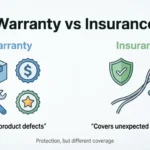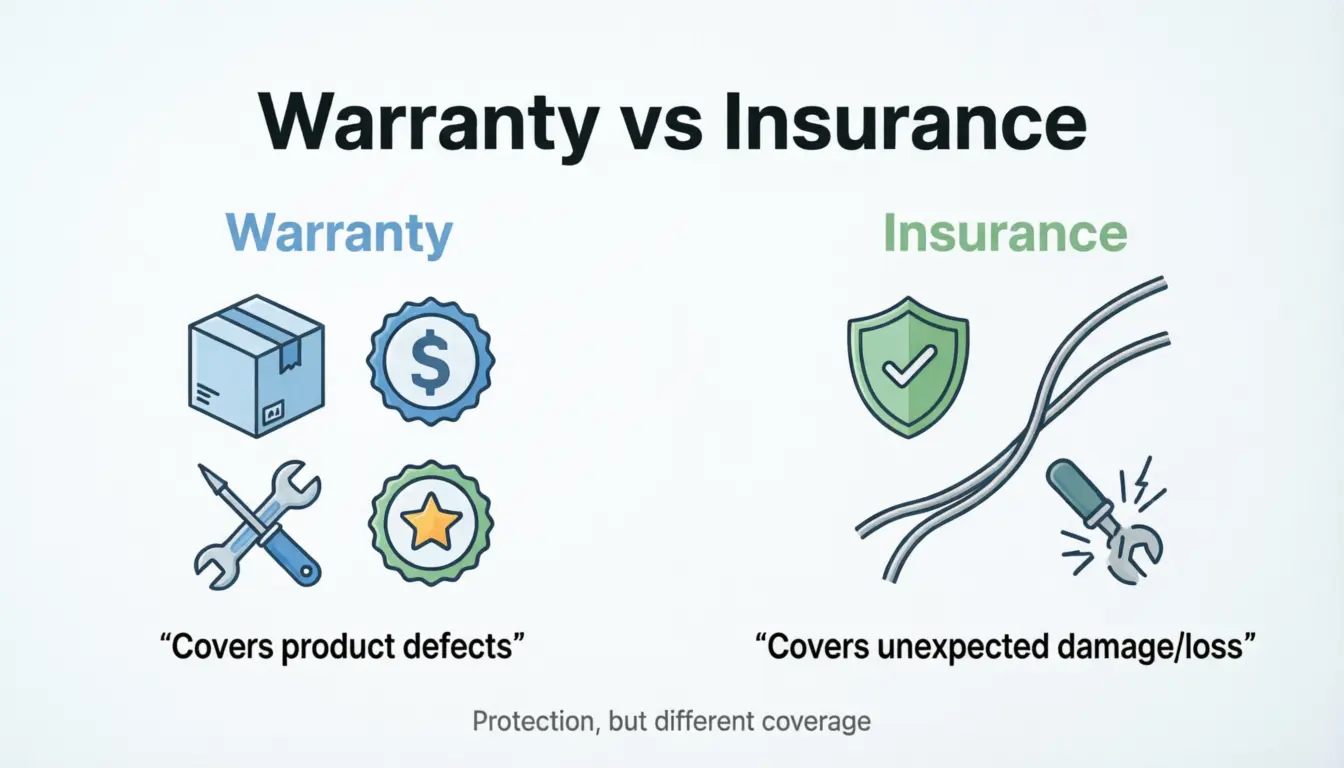
“The difference between warranty and insurance is simple. A warranty covers product faults or factory problems for a limited time. Insurance covers bigger risks like theft, accidents, or damage. Warranty is often free with a product, while insurance usually needs monthly or yearly payment.
Have you ever bought a phone, TV, or car and heard the words warranty and insurance? Many people get confused. They sound the same because both help when something goes wrong. But they are not the same.
This is why many people search for the difference between warranty and insurance. They want to know which one covers damage, repairs, or loss. They also want to know which is better: warranty or insurance.
A warranty usually comes from the maker of the product. Insurance comes from an insurance company. Both protect you, but in different ways.
In this guide, you will learn warranty vs insurance in very simple words. We will compare both, look at real-life examples, and help you decide which one is better for your needs.
What Is Warranty?
A warranty is a promise from the company that made the product.
It says if the product has a problem because of bad making, the company will fix or replace it.
Key Features of Warranty
- Usually comes with the product
- Covers factory defects
- Works for a set time
- Often free
Real-Life Example
You buy a new washing machine. After 6 months, it stops working because of a motor problem. If it is under warranty, the company repairs it for free.
A warranty is like a promise:
“If our product breaks because of us, we will fix it.”
What Is Insurance?
Insurance is protection from risk.
You pay money to an insurance company. In return, they help pay for loss or damage.
Insurance can cover accidents, theft, fire, or other unexpected problems.
Key Features of Insurance
- Needs regular payment
- Covers many risks
- Can protect costly items
- Helps with big losses
Real-Life Example
You drop your phone and break the screen. If you have phone insurance, the company may pay for repair.
Insurance is like a safety net:
“If something bad happens, we help you.”
Difference Between Warranty and Insurance
| Feature | Warranty | Insurance |
| Meaning | Promise from maker | Protection from risk |
| Use | Covers product faults | Covers accidents and loss |
| Features | Limited coverage | Wide coverage |
| Purpose | Fix factory problems | Protect against damage or theft |
Key Differences Explained
Coverage
Warranty covers factory defects.
Insurance covers accidents, theft, and damage.
Example:
If your fridge stops because of a factory issue, warranty helps.
If your fridge gets damaged in a flood, insurance may help.
Cost
Warranty is often free.
Insurance needs payment.
Example:
A laptop may come with a one-year warranty. But laptop insurance may cost money every month.
Time Period
Warranty lasts for a fixed time.
Insurance stays active as long as you keep paying.
Example:
Your TV warranty may end after two years. Insurance can continue for many years.
Risk Level
Warranty covers low-risk product issues.
Insurance covers bigger risks.
Example:
A phone battery issue = warranty.
Phone stolen = insurance.
Provider
Warranty comes from the product company.
Insurance comes from an insurance company.
Example:
Samsung may give a warranty.
An insurance company gives mobile insurance.
Examples
Here are simple warranty vs insurance examples:
Mobile Phone
Warranty covers software issues or battery defects.
Insurance covers screen break or theft.
Car
Bike warranty covers engine defects.
Car insurance covers accident damage.
Laptop
Warranty covers keyboard issues if made badly.
Insurance covers water damage.
Home Appliances
Warranty covers machine faults.
Insurance covers fire damage.
These examples show the difference between warranty and insurance clearly.
Importance of Knowing the Difference
Knowing warranty vs insurance is important.
Why?
Because it saves money.
If you know what each one covers, you can avoid paying for something you do not need.
For example:
If your product already has a warranty, you may not need extra repair plans.
But if the item is expensive, insurance may be smart.
It also helps you understand your rights.
When your product breaks, you know who to contact.
This reduces stress and confusion.
Benefits of Understanding Warranty vs Insurance
Better Decisions
You choose the right protection.
Less Confusion
You know what covers what.
Save Money
No extra spending on the wrong plan.
Smart Buying
You buy with confidence.
Better Protection
Your item stays safe from different risks.
Understanding the difference between warranty and insurance helps you become a smarter buyer.
Common Mistakes People Make
Thinking Warranty Covers Everything
This is wrong.
Warranty only covers maker defects.
It does not cover accidents.
Thinking Insurance Is Free
Insurance is not free.
You must pay for it.
Ignoring Terms
Many people do not read the details.
This causes problems later.
Buying Insurance for Cheap Items
Sometimes the item is not costly enough for insurance.
Think before buying.
Missing Warranty Dates
Some people forget the warranty period.
Then they lose free repair.
Real-Life Use
When Warranty Is Used
- Electronics
- Home appliances
- Cars
- Gadgets
Used when products stop working because of factory problems.
When Insurance Is Used
- Cars
- Homes
- Phones
- Health
- Travel
Used when there is risk of accident or loss.
Who Uses Them?
Almost everyone.
Buyers use warranties.
People with costly things use insurance.
Easy Trick to Remember the Difference
Here is a simple trick:
Warranty = Work problem
If the product does not work because of a company mistake.
Insurance = Incident problem
If something bad happens like theft, fire, or accident.
Easy memory:
W = Warranty = Wrong making
I = Insurance = Injury or Incident
This trick makes warranty vs insurance easy to remember.
Which One Is Better?
Many people ask: Which is better warranty or insurance?
The answer depends.
Warranty is better if:
- You want free repair
- The product is new
- You want basic protection
Insurance is better if:
- The product is expensive
- You fear accidents
- You want full protection
Best choice?
Sometimes both.
Example:
A new phone with warranty plus insurance gives strong protection.
So, warranty vs insurance depends on your needs.
FAQs
1. What is the difference between warranty and insurance?
Warranty covers factory defects. Insurance covers risks like accidents or theft.
2. Which is better warranty or insurance?
It depends. Warranty is good for product faults. Insurance is better for accidents.
3. Why are warranty and insurance confused?
Because both protect products, but in different ways.
4. Are warranty and insurance the same?
No. They have different purposes.
5. When should I use warranty?
Use warranty when the product has a maker fault.
6. When should I use insurance?
Use insurance when there is accidental damage, loss, or theft.
7. Which is more useful?
Both are useful. It depends on the situation.
Conclusion
The difference between warranty and insurance is easy once you understand it. A warranty is a company promise to fix product faults. Insurance is paid protection against bigger risks like theft, accidents, or damage.
In simple words, warranty protects you from product mistakes. Insurance protects you from life’s surprises.
When comparing warranty vs insurance, think about what you need. If your item is new, a warranty may be enough. If your item is costly or easy to damage, insurance may be a smart choice.
Knowing the difference helps you save money and make better choices. Next time you buy a phone, car, or appliance, ask yourself: Do I need warranty, insurance, or both?
That simple question can protect your money and your peace of mind.

I am an English language writer and editor with over 10 years of experience in explaining confusing English words, grammar rules, and word usage differences. I specialize in making complex language topics simple, clear, and practical for everyday readers.
At diffruli.com, I am helping learners to understand common English word differences such as spelling variations, similar meanings, and correct usage in American and British English. My writing style is reader-friendly, example-driven, and designed to improve confidence in written and spoken English.