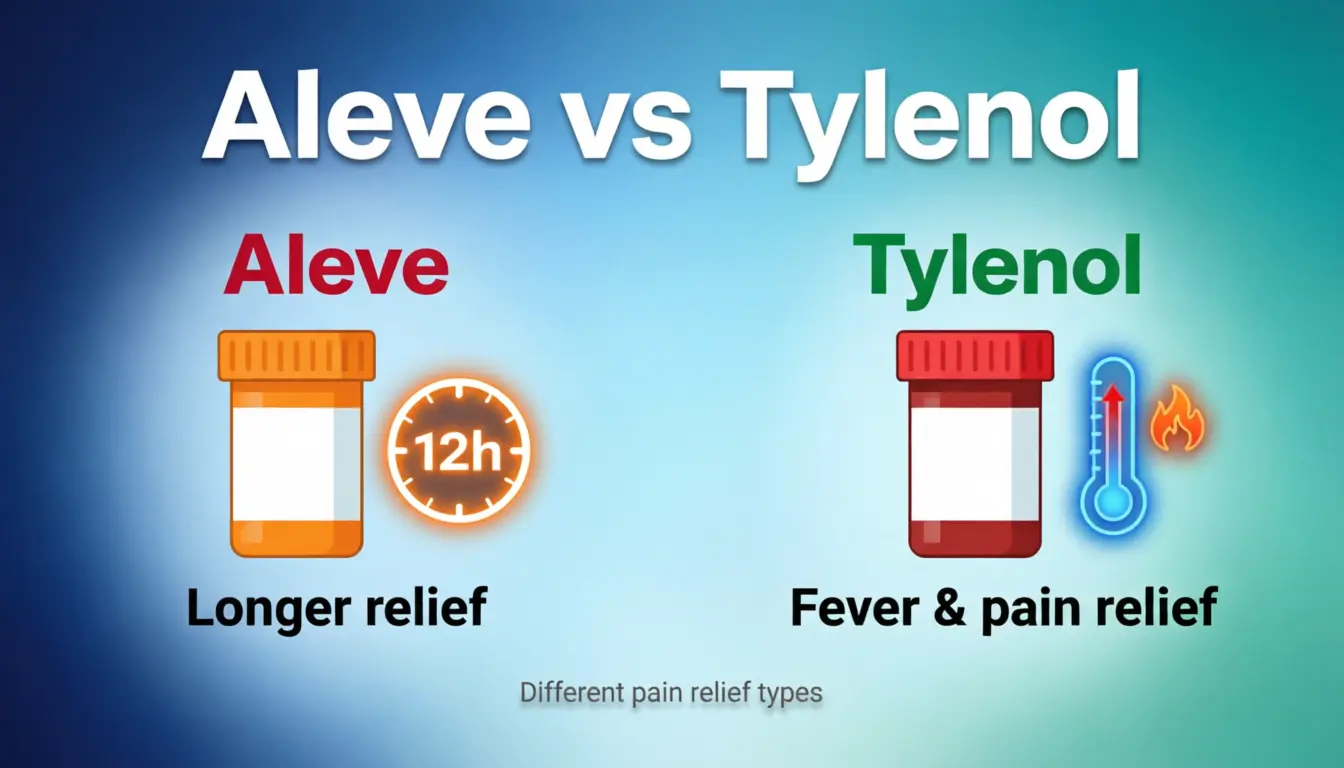
“The difference between Aleve and Tylenol is how they work and what they treat best. Aleve reduces pain and swelling and lasts longer. Tylenol helps reduce pain and fever but does not lower swelling. Aleve may work better for inflammation, while Tylenol is often gentler on the stomach.
Many people stand in a store and ask the same question: should I buy Aleve or Tylenol? Both help with pain. Both are easy to find. But they are not the same medicine.
Some people use them for headaches. Others take them for fever, back pain, or body aches. This is why many people search for the difference between Aleve and Tylenol online.
Using the wrong medicine may not help your pain. In some cases, it may even upset your stomach or affect your liver. That is why it is important to know when to use each one.
In this guide, you will learn what Aleve and Tylenol are, how they work, their main differences, side effects, and which one may be better for your needs. The explanations are simple and easy to understand.
What Is Aleve?
Aleve is a pain medicine. Its main ingredient is naproxen sodium.
It belongs to a group called NSAIDs. NSAID means nonsteroidal anti-inflammatory drug. This type of medicine lowers pain, fever, and swelling.
People often use Aleve for:
- Back pain
- Muscle pain
- Arthritis
- Tooth pain
- Menstrual cramps
- Joint swelling
One strong point of Aleve is that it lasts a long time. Many people only take it every 8 to 12 hours.
Real-Life Example
If someone has knee swelling after exercise, Aleve may help because it lowers inflammation and pain together.
What Is Tylenol?
Tylenol is also a pain medicine. Its main ingredient is acetaminophen.
Tylenol helps lower pain and fever. But unlike Aleve, it does not reduce swelling much.
People often use Tylenol for:
- Headaches
- Fever
- Mild body aches
- Cold and flu symptoms
- Toothaches
Tylenol is often easier on the stomach than Aleve. Many doctors suggest it for people who cannot take NSAIDs.
Real-Life Example
If a child has a fever from the flu, Tylenol is often used to help reduce the fever and body pain.
Difference Between Aleve and Tylenol
| Feature | Aleve | Tylenol |
| Meaning | NSAID pain reliever | Acetaminophen pain reliever |
| Use | Pain, swelling, fever | Pain and fever |
| Features | Reduces inflammation | Gentle on stomach |
| Purpose | Long-lasting pain relief | Fast relief for fever and pain |
Key Differences Explained
Pain Relief
Both medicines help with pain. But they work in different ways.
Aleve is often better for pain linked with swelling. Tylenol is better for simple pain and fever.
Real Example
A person with arthritis may choose Aleve. A person with a mild headache may choose Tylenol.
Swelling and Inflammation
This is one of the biggest differences between Aleve and Tylenol.
Aleve lowers inflammation. Tylenol usually does not.
Inflammation means swelling, redness, or warmth in the body.
Real Example
If your ankle is swollen after sports, Aleve may help more than Tylenol.
How Long They Last
Aleve lasts longer in the body.
Many people take Aleve once or twice a day. Tylenol may need to be taken every 4 to 6 hours.
Real Example
Someone with long work hours may like Aleve because it lasts longer.
Stomach Effects
Tylenol is usually softer on the stomach.
Aleve can sometimes cause stomach pain, heartburn, or irritation.
Real Example
A person with a sensitive stomach may prefer Tylenol.
Liver and Kidney Concerns
Tylenol may hurt the liver if too much is taken.
Aleve may affect the kidneys or stomach if used too often.
Real Example
People with liver disease should be careful with Tylenol. People with kidney problems should speak with a doctor before using Aleve.
Fever Control
Both medicines can reduce fever.
Tylenol is very common for fever in children and adults.
Real Example
Parents often use Tylenol when a child has a high temperature.
Daily Use
Some people use Aleve for long-term pain conditions. Others use Tylenol for quick relief.
Real Example
A worker with back pain may use Aleve. A student with a headache may choose Tylenol.
Examples
Here are some simple daily examples of Aleve vs Tylenol:
- A runner with sore knees may use Aleve.
- A person with a cold fever may use Tylenol.
- Someone with swollen joints may choose Aleve.
- A person with a mild headache may pick Tylenol.
- A woman with painful cramps may use Aleve.
- A child with flu symptoms may take Tylenol.
These examples show that the best choice depends on the problem.
Importance of Knowing the Difference
Knowing the difference between Aleve and Tylenol matters because each medicine works differently.
Using the right one may help you feel better faster. It may also lower the chance of side effects.
Some people think all pain medicines are the same. That is not true. One may work well for swelling, while another may be safer for the stomach.
Understanding these differences also helps people avoid taking too much medicine or mixing drugs in unsafe ways.
This simple knowledge can help families make smarter choices at home.
Benefits of Understanding Aleve vs Tylenol
Learning about Aleve vs Tylenol gives many benefits.
Better Decisions
You can choose the medicine that matches your symptoms.
Less Confusion
You will understand why doctors or pharmacists suggest one over the other.
Smarter Choices
You can avoid medicines that may upset your stomach or affect your liver.
Practical Knowledge
You can help family members choose the right pain reliever for simple problems.
Common Mistakes People Make
Many people confuse Aleve and Tylenol.
Here are some common mistakes:
Thinking They Are the Same
They both help pain, but they work differently.
Using Aleve for Every Problem
Aleve is not always best for mild headaches or simple fever.
Taking Too Much Tylenol
Too much Tylenol can seriously hurt the liver.
Ignoring Side Effects
Some people forget that Aleve can irritate the stomach.
Mixing Medicines Without Advice
Some cold medicines already contain acetaminophen, which is the main ingredient in Tylenol.
Always read labels carefully.
Real-Life Use
Aleve and Tylenol are used by many different people.
Aleve Users
- Adults with arthritis
- Athletes with muscle pain
- People with swelling or joint pain
Tylenol Users
- Children with fever
- Adults with headaches
- People with stomach sensitivity
When It Matters
Choosing the right medicine matters most when pain lasts longer or when health conditions are involved.
Easy Trick to Remember the Difference
Here is a simple memory trick:
Aleve = Anti-swelling
The letter “A” in Aleve can remind you of “anti-inflammatory.”
Tylenol = Temperature
The letter “T” in Tylenol can remind you of “temperature” and fever relief.
This easy trick helps many beginners remember the difference quickly.
Which One Is Better?
Many people ask, “Which is better, Aleve or Tylenol?”
The answer depends on the situation.
Aleve may be better for:
- Swelling
- Arthritis
- Muscle pain
- Long-lasting pain relief
Tylenol may be better for:
- Fever
- Mild headaches
- Sensitive stomachs
- Children’s pain relief
Neither medicine is perfect for every problem.
The best choice depends on your symptoms, age, and health condition.
FAQs
What is the difference between Aleve and Tylenol?
Aleve reduces pain, fever, and swelling. Tylenol mainly reduces pain and fever.
Which is better Aleve or Tylenol?
It depends on the problem. Aleve may work better for inflammation. Tylenol may be better for fever or stomach-sensitive users.
Are Aleve and Tylenol the same?
No. They contain different ingredients and work differently in the body.
Why are Aleve and Tylenol confused?
People confuse them because both are common pain relievers sold in stores.
When should I use Aleve?
Aleve is often used for swelling, arthritis, muscle pain, and cramps.
When should I use Tylenol?
Tylenol is often used for fever, headaches, and mild pain.
Which is easier on the stomach?
Tylenol is usually gentler on the stomach than Aleve.
Conclusion
Understanding the difference between Aleve and Tylenol can help you choose the right pain reliever for your needs. Both medicines help with pain and fever, but they work in different ways.
Aleve is often better for swelling, muscle pain, and long-lasting relief. Tylenol is usually better for fever, headaches, and people with sensitive stomachs. Neither medicine is always better than the other.
The best choice depends on your symptoms and health needs. Knowing these simple differences can help you avoid confusion and make safer choices at home.
Next time you compare Aleve vs Tylenol, think about the type of pain, how long you need relief, and whether swelling is part of the problem. A little knowledge can make choosing the right medicine much easier.

I am an English language writer and editor with over 10 years of experience in explaining confusing English words, grammar rules, and word usage differences. I specialize in making complex language topics simple, clear, and practical for everyday readers.
At diffruli.com, I am helping learners to understand common English word differences such as spelling variations, similar meanings, and correct usage in American and British English. My writing style is reader-friendly, example-driven, and designed to improve confidence in written and spoken English.