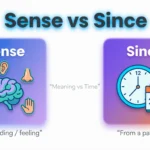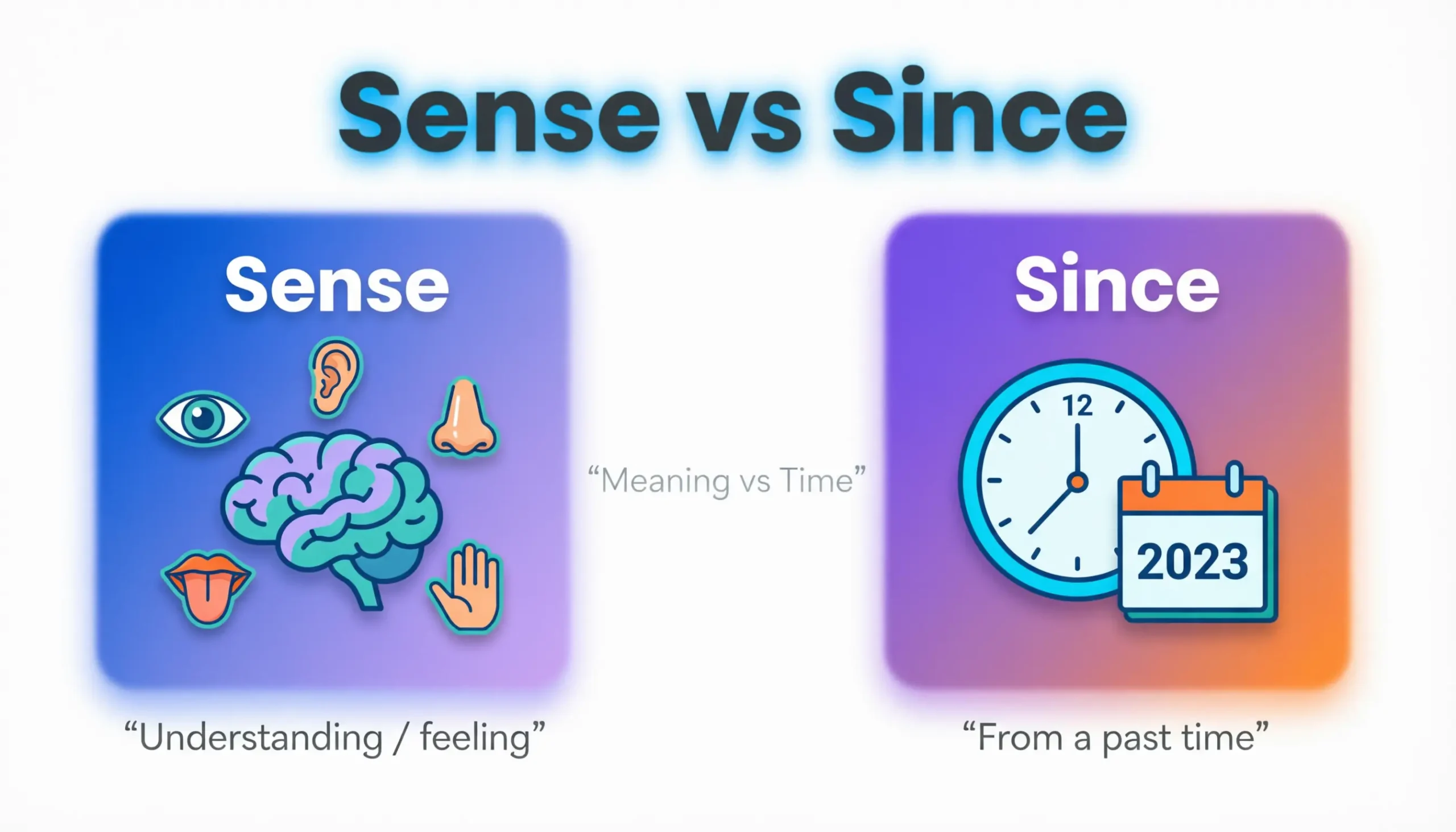
“Difference between sense and since is simple. Sense means meaning, feeling, or understanding. Since shows time or reason. Many people confuse sense and since in English writing. Understanding sense vs since helps you avoid grammar mistakes and use correct words in daily communication easily.
Many learners get confused when they see the words sense and since in English. They look similar in spelling, but their meaning is very different. Because of this, people often search for the difference between sense and since to avoid mistakes in writing and speaking.
In this guide, you will learn what each word means, how to use them, and simple examples for daily life. We will also show sense vs since in easy comparison so you never mix them again.
This will help beginners improve grammar, writing skills, and confidence in English communication. By the end, you will clearly understand when to use sense and when to use since in sentences.
This simple guide makes the difference between sense and since very easy for everyone. No prior grammar knowledge is needed.
What Is Sense?
Sense is a word used to show meaning, feeling, or understanding.
It helps us explain what we feel or think about something.
Key Features:
- Means understanding or feeling
- Used in emotions and logic
- Helps explain ideas clearly
Real-Life Example:
- “That makes sense.”
- “I have a sense of danger.”
Here, sense shows understanding or feeling. It helps describe what we think in a situation.
What Is Since?
Since is a word used to talk about time or reason.
It tells when something started or why something happens.
Key Features:
- Shows time (from past to now)
- Shows reason (because)
- Used in sentences for timing
Real-Life Example:
- “I have lived here since 2020.”
- “Since it is raining, we stayed inside.”
Here, since shows time and reason clearly.
Difference Between Sense and Since
| Feature | Sense | Since |
| Meaning | Understanding or feeling | Time or reason |
| Use | Emotions and ideas | Time and cause |
| Features | Expresses thoughts | Connects time/events |
| Purpose | To show meaning | To show start time or reason |
Key Differences Explained
Meaning Difference
Sense means understanding or feeling.
Since means time or reason.
Example:
- Sense: “This idea makes sense.”
- Since: “Since morning, I am busy.”
Use in Sentences
Sense is used when talking about thoughts.
Since is used when talking about time or cause.
Example:
- Sense: “Your words make sense.”
- Since: “I am tired since I woke up early.”
Grammar Role
Sense works as a noun or verb.
Since works as a preposition, conjunction, or adverb.
Example:
- Sense: “Use your sense.”
- Since: “Since you asked, I will help.”
Purpose in Communication
Sense helps explain understanding.
Since helps connect time or reason.
Example:
- Sense: “It makes sense now.”
- Since: “Since it is late, we should sleep.”
Examples
Here are simple daily life examples:
- “Does this plan make sense?”
- “I have been waiting since morning.”
- “Your idea does not make sense.”
- “Since it is hot, we drink water often.”
These examples show how both words work in real life.
Importance of Knowing the Difference
Knowing the difference between sense and since is important because it helps you write correct English. Many people mix these words and make grammar mistakes.
It also helps you speak clearly. When you understand both words, your communication becomes better and easier to understand.
This knowledge is useful in school, work, and daily conversations. It reduces confusion and builds confidence in English.
Benefits of Understanding Sense vs Since
- Better grammar skills
- Less confusion in writing
- Clear communication
- Smarter word choices
When you know the difference, you avoid common mistakes and improve your English fast.
Common Mistakes People Make
Many learners mix these words because they look similar.
Mistake 1: Wrong use of sense
“I am here since this idea.” ❌
Correction:
“This idea makes sense.” ✔
Mistake 2: Wrong use of since
“This sense morning I am busy.” ❌
Correction:
“I am busy since morning.” ✔
Mistake 3: Confusing meaning
People think both words mean the same. This is wrong.
Sense is about meaning. Since is about time or reason.
Real-Life Use
Sense is used in thinking, talking, and understanding ideas. Students, teachers, and writers use it often.
Since is used in daily time expressions and explanations. Everyone uses it in speaking and writing.
Example:
- Sense: “This story makes sense.”
- Since: “Since yesterday, I am sick.”
Both words are important in English communication.
Easy Trick to Remember the Difference
Use this simple trick:
- Sense = “Think and Feel”
- Since = “Start and Time”
If you think or feel something, use sense.
If you talk about time or reason, use since.
This trick makes it very easy to remember.
Which One Is Better?
There is no better word between sense and since.
Both are useful in different situations. It depends on what you want to say.
If you talk about meaning or understanding, use sense.
If you talk about time or reason, use since.
So, the choice depends on your sentence.
FAQs
1. What is the difference between sense and since?
Sense means understanding or feeling. Since means time or reason.
2. Which is better sense or since?
Neither is better. Both are used for different purposes.
3. Why are sense and since confused?
They look similar in spelling but have different meanings.
4. Are sense and since the same?
No, they are completely different words.
5. When to use sense or since?
Use sense for meaning. Use since for time or reason.
6. Which is more useful?
Both are useful in daily English communication.
7. Which is easier to understand?
Sense is easier for meaning. Since is easy for time.
Conclusion
Understanding the difference between sense and since is very important for learning English. Sense is used for meaning, feeling, and understanding. Since is used for time and reason. Many learners mix these words, but now you clearly know the difference between sense and since.
With simple examples and easy tricks, you can remember sense vs since without confusion. This helps improve grammar, speaking, and writing skills. Always think about meaning when using sense and think about time or reason when using since. People also search for Hope that makes sense or Since, Hope that makes sense or Since, Ever since or sense, Are since and sense homophones, Are since and sense homophones, Difference between sense and since grammar and etc.
This guide makes the difference between sense and since clear and easy for beginners. Keep practicing and your English will become stronger every day.
Discover More Article:
Difference Between Warranty and Insurance – Simple Guide to Know What Protects You

I am an English language writer and editor with over 10 years of experience in explaining confusing English words, grammar rules, and word usage differences. I specialize in making complex language topics simple, clear, and practical for everyday readers.
At diffruli.com, I am helping learners to understand common English word differences such as spelling variations, similar meanings, and correct usage in American and British English. My writing style is reader-friendly, example-driven, and designed to improve confidence in written and spoken English.